
South Korea's KOSPI Volatility Surpasses Bitcoin Amid Market Instability
Key Facts
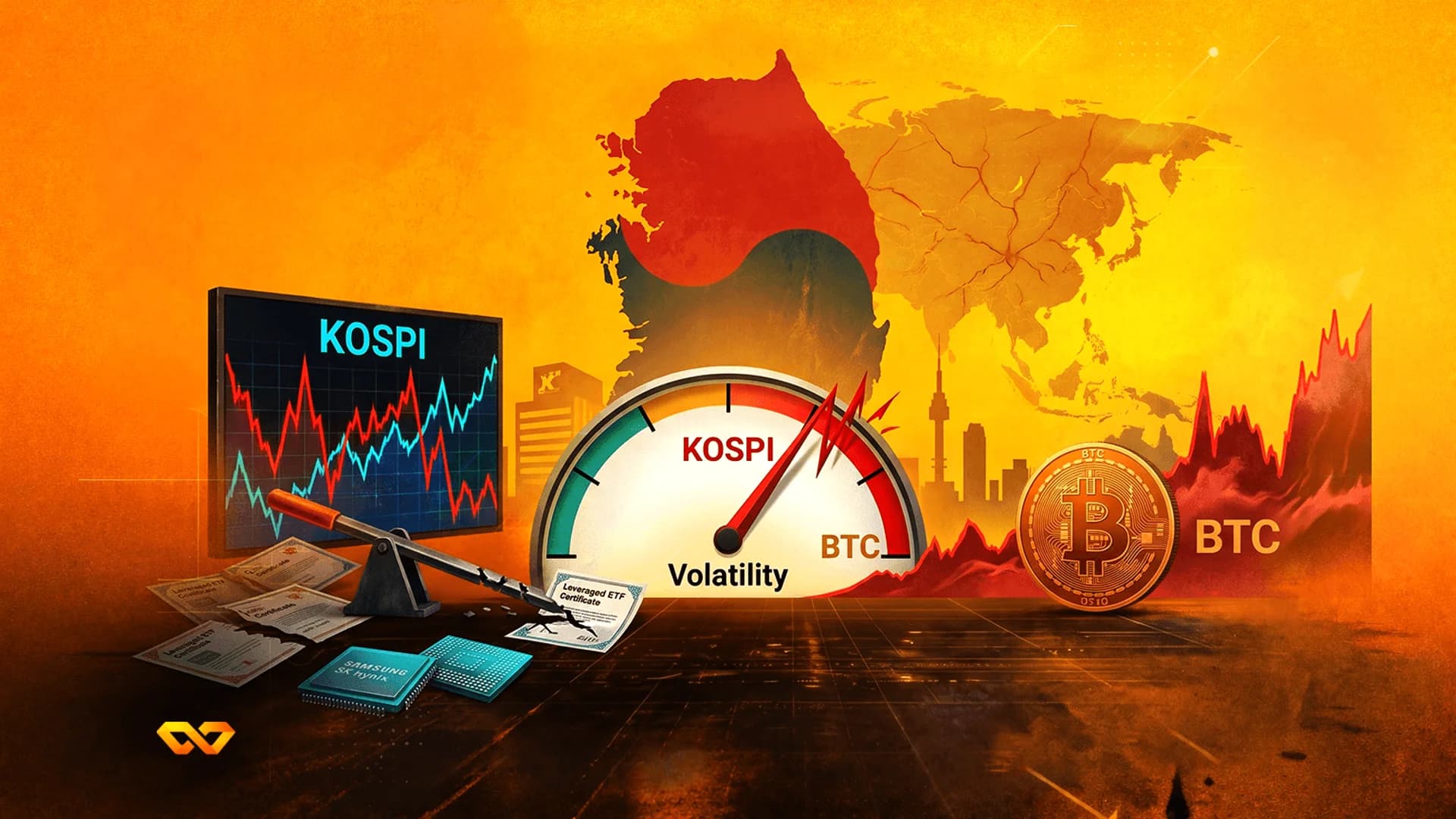
Amid a period of heightened global financial uncertainty, South Korean equities have experienced a radical shift in traditional risk profiles. According to reports, the KOSPI index realized annualized volatility of 57%, effectively surpassing Bitcoin's realized volatility of 47%. This development highlights a period of intense market instability in South Korea that has pushed equity swings to levels typically reserved for highly speculative digital assets.
This surge in volatility contrasts with a relative stabilization in the cryptocurrency market, where Bitcoin's price swings remained below its historical peaks. In a regional context, market data shows that while Japan's Nikkei 225 has also faced turbulence recently, the intensity of the KOSPI's movement has been exceptional. Market analysts suggest this divergence stems from aggressive sell-offs and shifting risk sentiment regarding Asian emerging markets.
Looking ahead, traders are monitoring South Korean economic indicators for signs of stabilization; notably, the unemployment rate was reported at 2.7% on July 14, 2026, slightly better than forecasts.