
US Oil & Gas Jobs Hit Multi-Year Lows Amid Record Output and Mergers
Key Facts
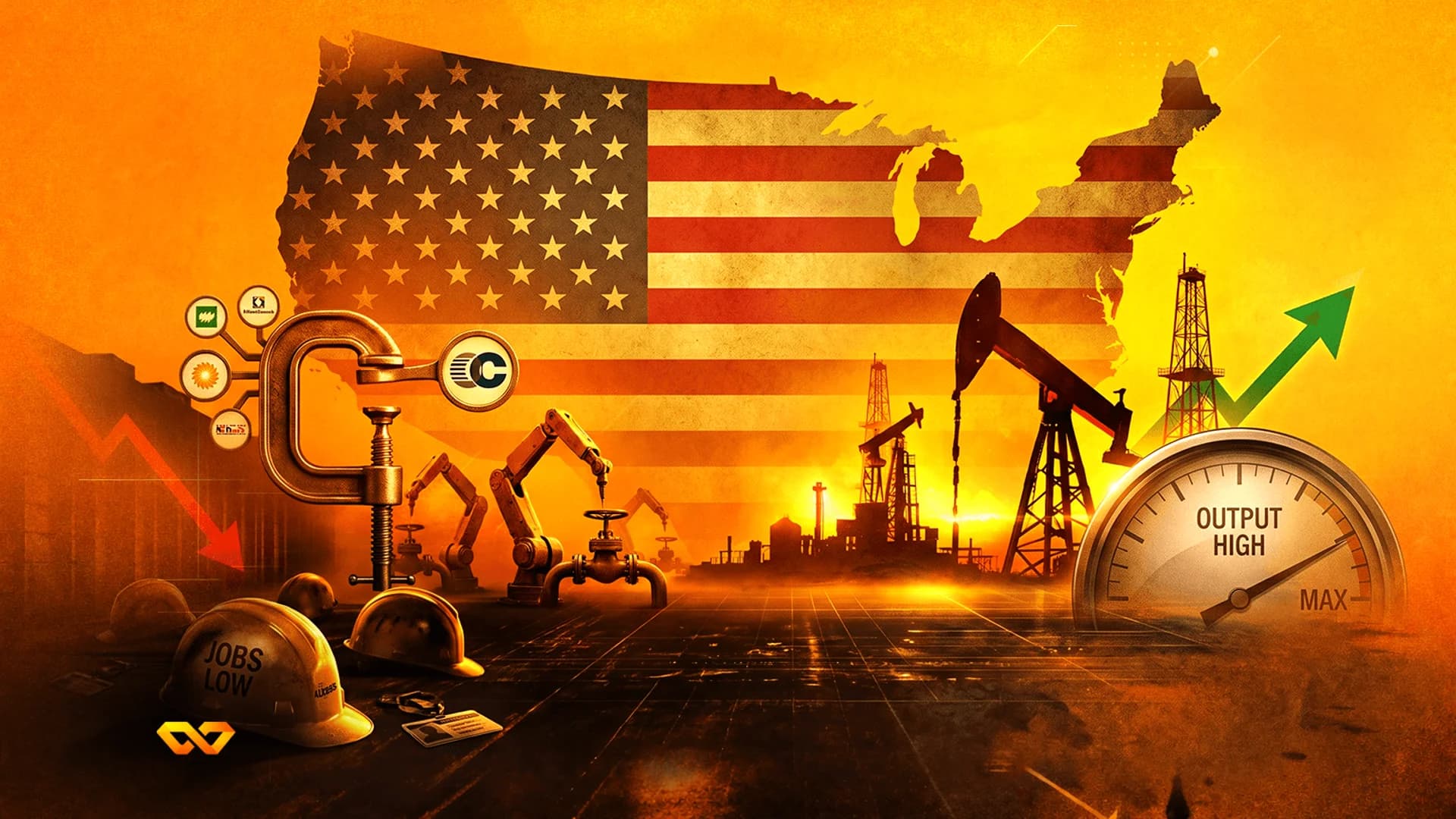
As energy giants prioritize profit margins through automation and consolidation, U.S. oil and gas extraction employment has hit multi-year lows. According to reports, the sector's workforce dropped to 114,500 in June, marking the second-lowest June level since the 2021 pandemic trough. This labor contraction comes as CVX prepares to cut up to 9,000 jobs—one-fifth of its global workforce—following its acquisition of Hess, while other majors including XOM, BP, and COP implement significant reductions for both staff and contractors.
This trend highlights a market paradox where U.S. production remains at record highs despite a shrinking labor footprint, underscoring massive efficiency gains in shale operations. Per market data, sector peers show resilient valuations; SHEL closed at $87.32 and XOM at $147.39 (close July 17, 2026). Analysts suggest that mega-mergers, such as Chevron’s $53 billion Hess deal, are driving firms to eliminate redundant operational costs, making workforce reductions a primary lever for boosting corporate margins.
Traders should monitor current price levels, with CVX at $187.36 and COP at $114.71 (close July 17, 2026). As the industry continues its restructuring phase, market participants are looking toward global supply signals following the OPEC meeting on July 13. Future catalysts will likely stem from broader economic data and Fed commentary, which will dictate investment appetite for the energy sector in the coming weeks.