
US Producer Prices See Surprise Drop, Strengthening Fed Rate Cut Case
Key Facts
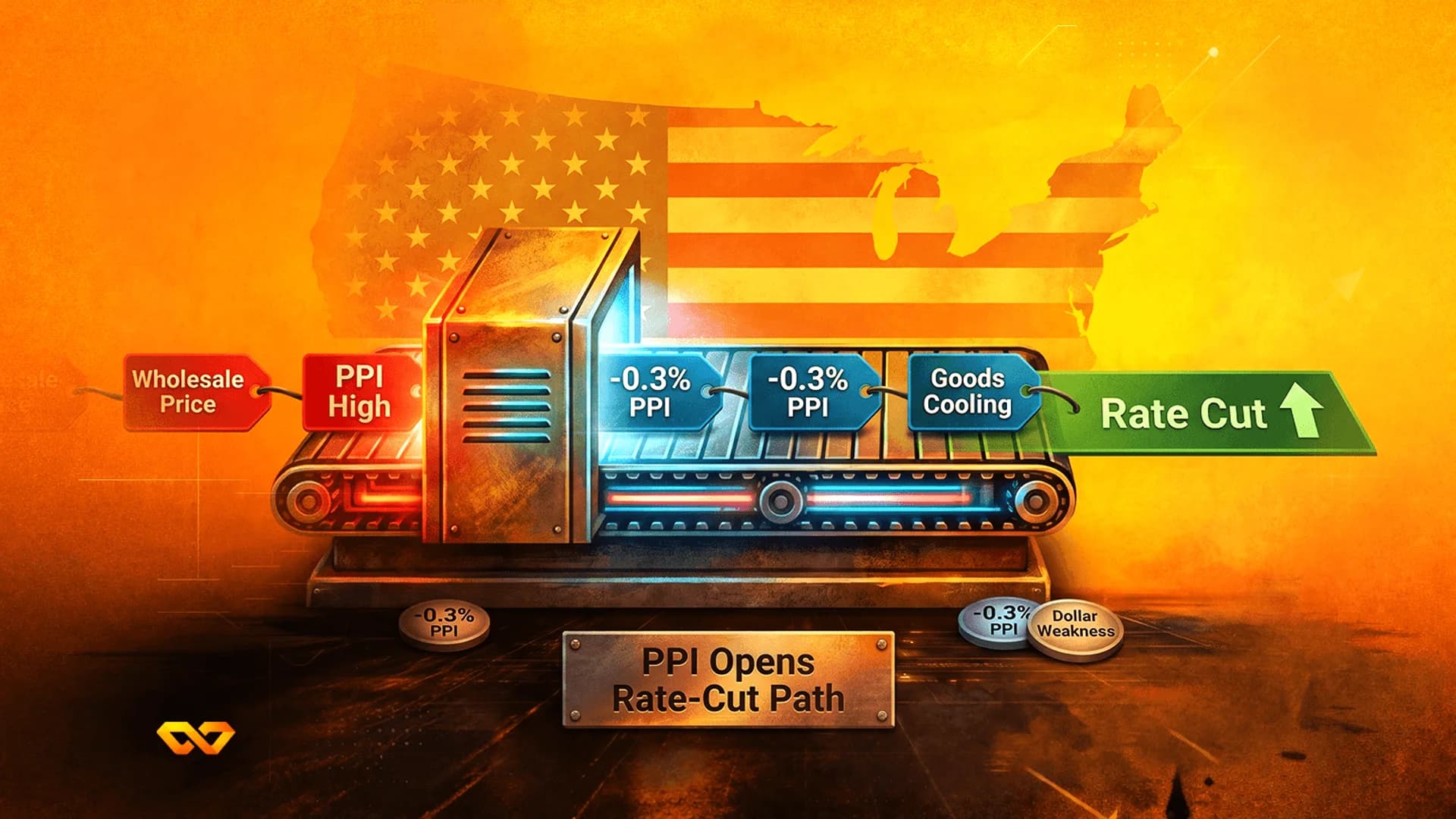
Reflecting a significant shift in the U.S. inflationary landscape, wholesale price growth has cooled more sharply than anticipated. The Producer Price Index (PPI) for June declined by 0.3%, coming in well below the consensus forecast of zero growth. According to the U.S. Bureau of Labor Statistics, this data suggests that inflationary pressures at the production level are easing rapidly, providing the Federal Reserve with more room to pivot toward rate cuts.
This cooling trend in the U.S. mirrors broader international data; per market data, China's monthly inflation rate also fell by 0.3% in July 2026, while Germany reported a 0.3% month-on-month decline in its Consumer Price Index for the same period. These synchronized signals of easing global inflation are generally viewed as bullish for risk assets, as they reduce the necessity for prolonged restrictive monetary policies across major economies.
Market participants are now looking ahead to the Federal Reserve's Monetary Policy Report scheduled for July 10, 2026, for further guidance on the interest rate trajectory. While current instrument price levels are unavailable at this snapshot, the focus remains on upcoming central bank communications, including speeches by Fed officials Williams and Logan, which will be critical in determining if this PPI miss translates into an earlier-than-expected rate cut.
Latest Updates · 1
- Notable·
Update: Markets reacted immediately to the data, with GBPUSD rallying to test a technical resistance zone between 1.3446 and 1.3465 amid USD weakness. Simultaneously, US two-year Treasury yields fell by approximately 4 basis points as investors increased bets on an imminent Fed rate cut.