
South Korea Liquidity Crisis Deepens After Surprise Rate Hike and Regulatory Crackdown
Key Facts
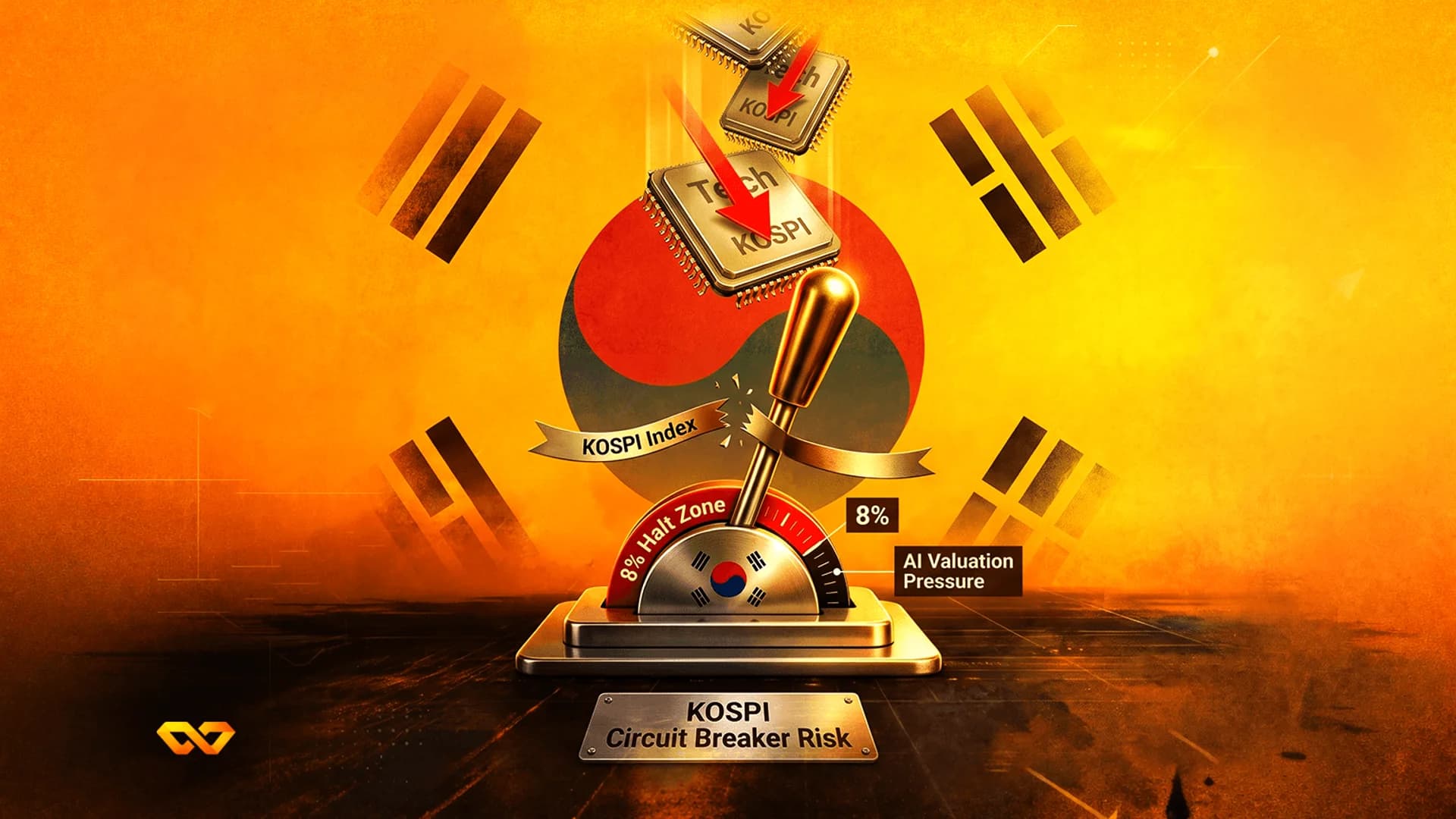
In a surprise move that has intensified pressure on struggling financial markets, the Bank of Korea raised its policy interest rate by 25 basis points to 2.75%, marking its first hike in over three years. This monetary tightening has deepened the rout in South Korean equities, triggering widespread margin calls affecting 1 in 30 Korean investors. Consequently, regulators have intervened by suspending new levered ETFs and hiking margin requirements to curb systemic volatility.
These domestic pressures coincide with a broader retreat in global technology valuations, where sentiment remains dampened by cautious outlooks from TSMC and looming U.S. trade restriction fears, per market data. Compared to regional peers like Japan's Nikkei 225 and the Hang Seng, the KOSPI has faced disproportionate selling pressure due to the unexpected hawkish pivot by the central bank, according to Bloomberg reports.
Investors are now focused on liquidity levels as the KOSPI trades at critical support levels as of the July 8, 2026 close. Looking ahead, the U.S. Federal Reserve's Monetary Policy Report on July 10, 2026, remains the pivotal catalyst for emerging markets, as traders search for any signs of global policy easing that might provide relief to the current liquidity crunch in Seoul.