
Bank of Korea Hikes Rates for First Time in Years to Curb Inflation
Key Facts
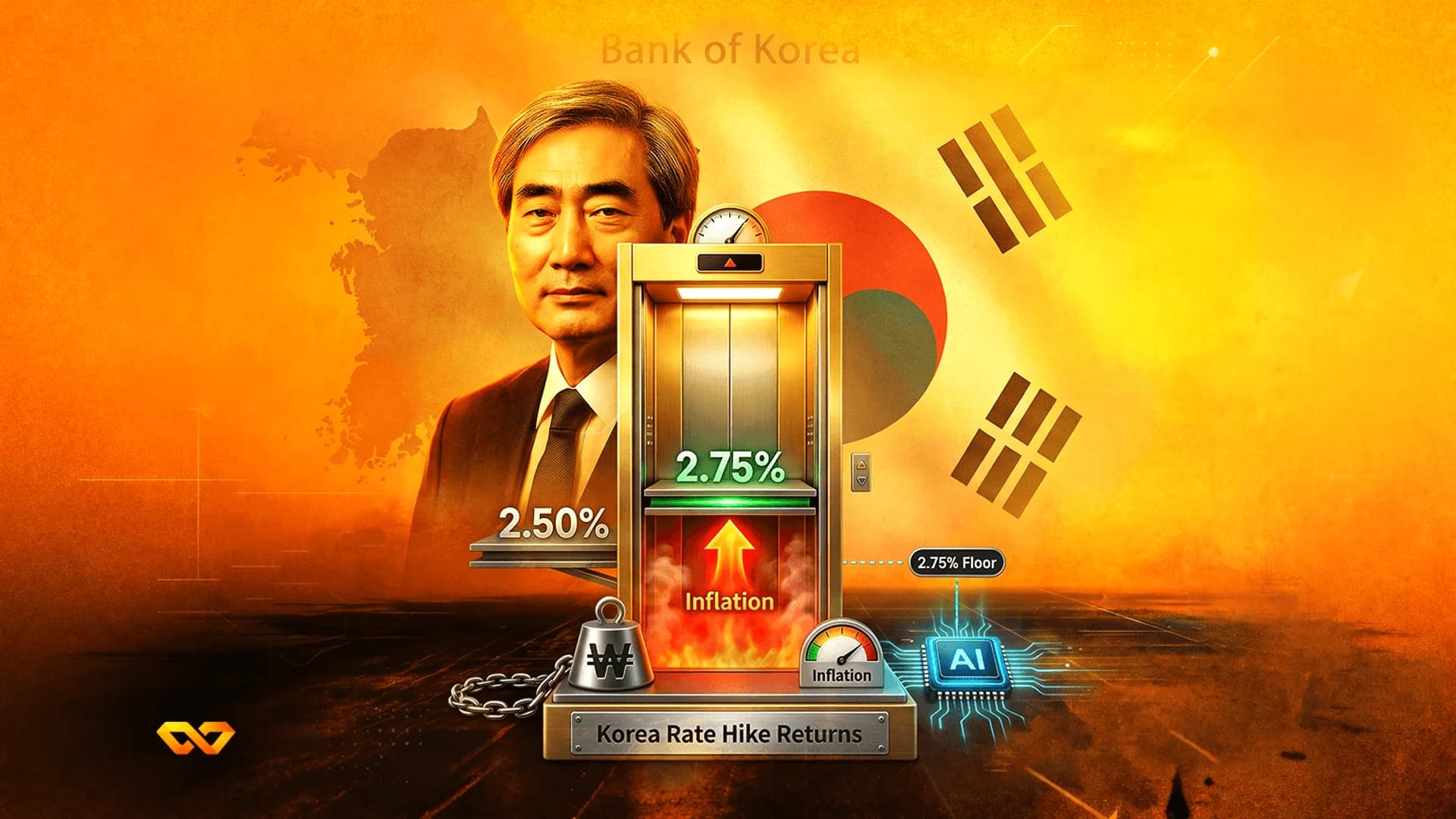
In a move reflecting a shift in Asian monetary policy, South Korea's central bank raised its base interest rate for the first time in three-and-a-half years. According to reports, this decision marks a definitive pivot toward monetary tightening aimed at countering inflationary pressures exacerbated by the U.S.-Iran conflict. The hike aligns the Bank of Korea with global policy trends as central banks struggle to contain rising consumer prices.
The Bank of Korea's decision comes amid mixed price pressures in the region, with market data showing China's annual inflation rate at 1% in July 2026, missing the 1.1% forecast per market data. Conversely, geopolitical tensions are escalating risks for energy and shipping costs, prompting policymakers in Seoul to take proactive measures to safeguard financial stability and prevent inflation from becoming entrenched.
Investors should watch for upcoming catalysts, including the U.S. Monetary Policy Report scheduled for July 10, 2026, which may provide further clues on the global interest rate trajectory and its influence on Asian capital flows.