
Ukraine Strikes Cripple Third of Russian Refining Capacity, Stranding 135M Barrels at Sea
Key Facts
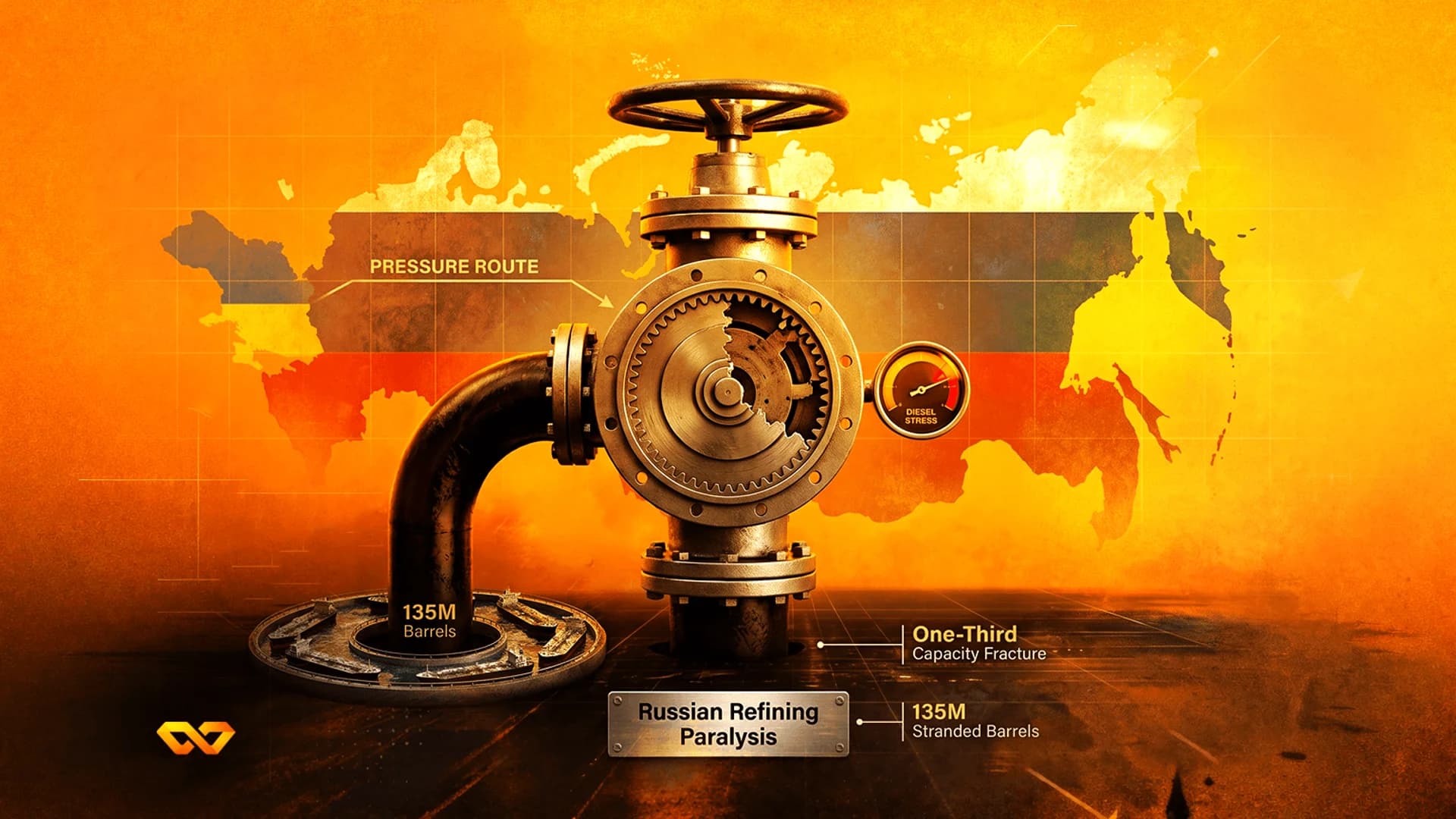
In a move reflecting a strategic escalation against energy infrastructure, Ukrainian drone strikes have knocked out approximately one-third of Russia's domestic oil refining capacity. According to reports, refining throughput has plummeted to 3.91 million barrels per day, the lowest level recorded since 2005. Recent strikes specifically targeted critical processing facilities, including the Gazprom Neftekhim Salavat and Afipsky plants, causing widespread operational paralysis.
This sudden disruption in Russian refineries has triggered a severe logistical crisis, with data indicating that nearly 135 million barrels of Russian crude oil are currently stranded at sea as Moscow is forced to surge export volumes to compensate for domestic refining outages. Per market data, this massive volume of stranded crude is impacting global refining margins and complicating supply chains at a time when markets are struggling to price in the loss of major processing units.
Looking ahead, traders are closely monitoring global oil price levels impacted by refined product supply fears, following the EIA report on July 8, 2026, which showed a US inventory build of 2.998 million barrels. As strikes on Russian territory continue, the market remains alert for any retaliation that could drive further energy price volatility, especially with Russian production capacity hitting critical lows not seen in over two decades.