
Merchant Ships Reject US Military Escorts in Strait of Hormuz Over Risk Concerns
Key Facts
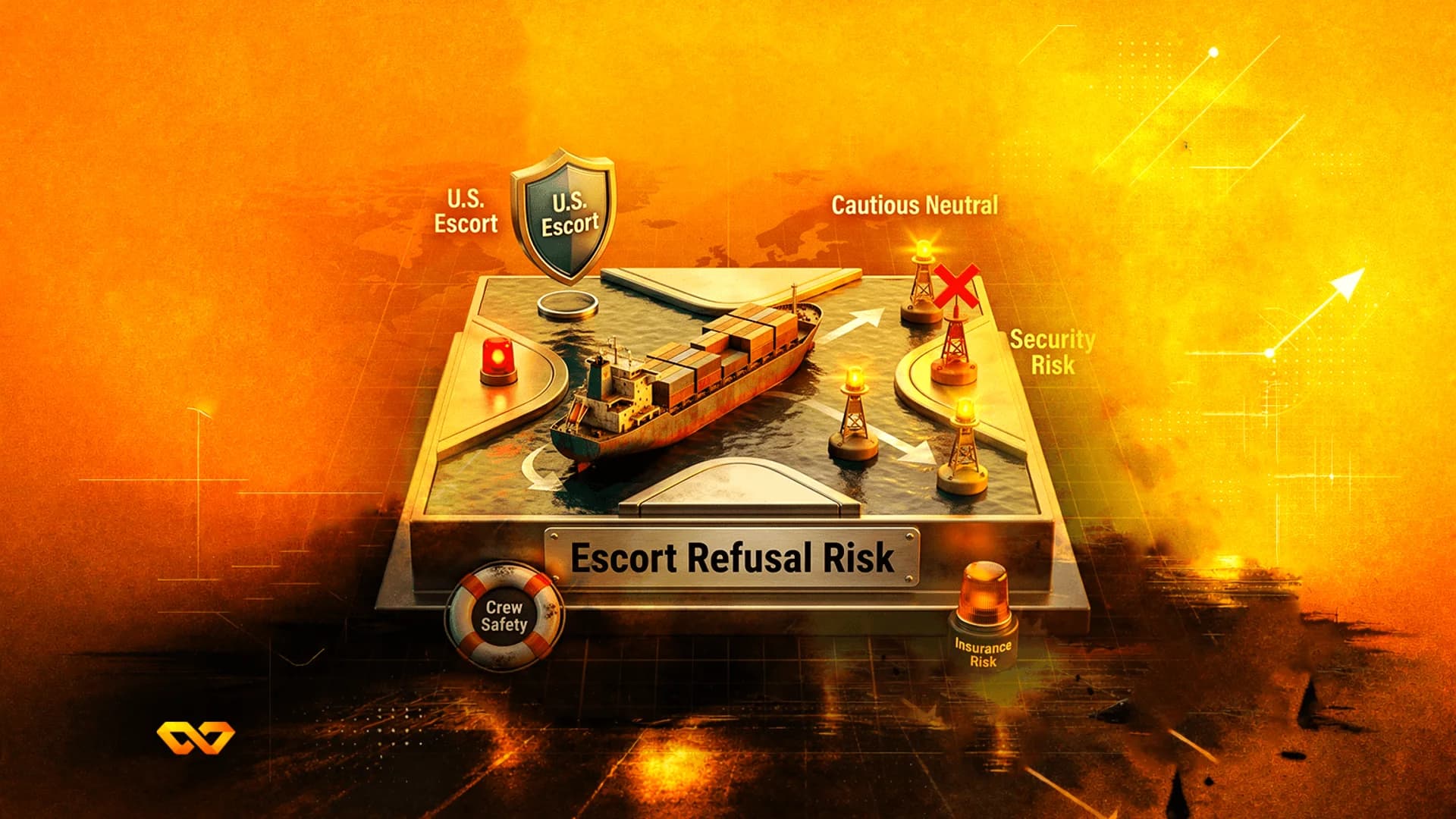
Amid escalating geopolitical tensions in one of the world's most vital energy corridors, reports indicate that some merchant ships are refusing to transit the Strait of Hormuz under US military protection. According to sources, this refusal follows recent attacks on tankers in the region. Shipping companies are increasingly opting to sail independently, citing concerns that association with US naval assets might attract further targeting rather than providing a deterrent effect.
This shift reflects a growing anxiety within the maritime sector that direct links to US military presence could render commercial vessels primary targets in a broader regional conflict. Historically, approximately 20% of global oil consumption passes through this strait, making any navigation disruption a critical factor for energy markets. War risk insurance premiums typically spike during such periods of friction, adding significant costs to global supply chains.
On the economic calendar, the US Monetary Policy Report scheduled for July 10, 2026, will be a key catalyst as it may address the impact of geopolitical risks on global price stability. The focus remains on whether international forces can secure the waterway without intensifying direct confrontations.