
China's Economic Growth Slows Sharply, Missing Official Government Targets
Key Facts
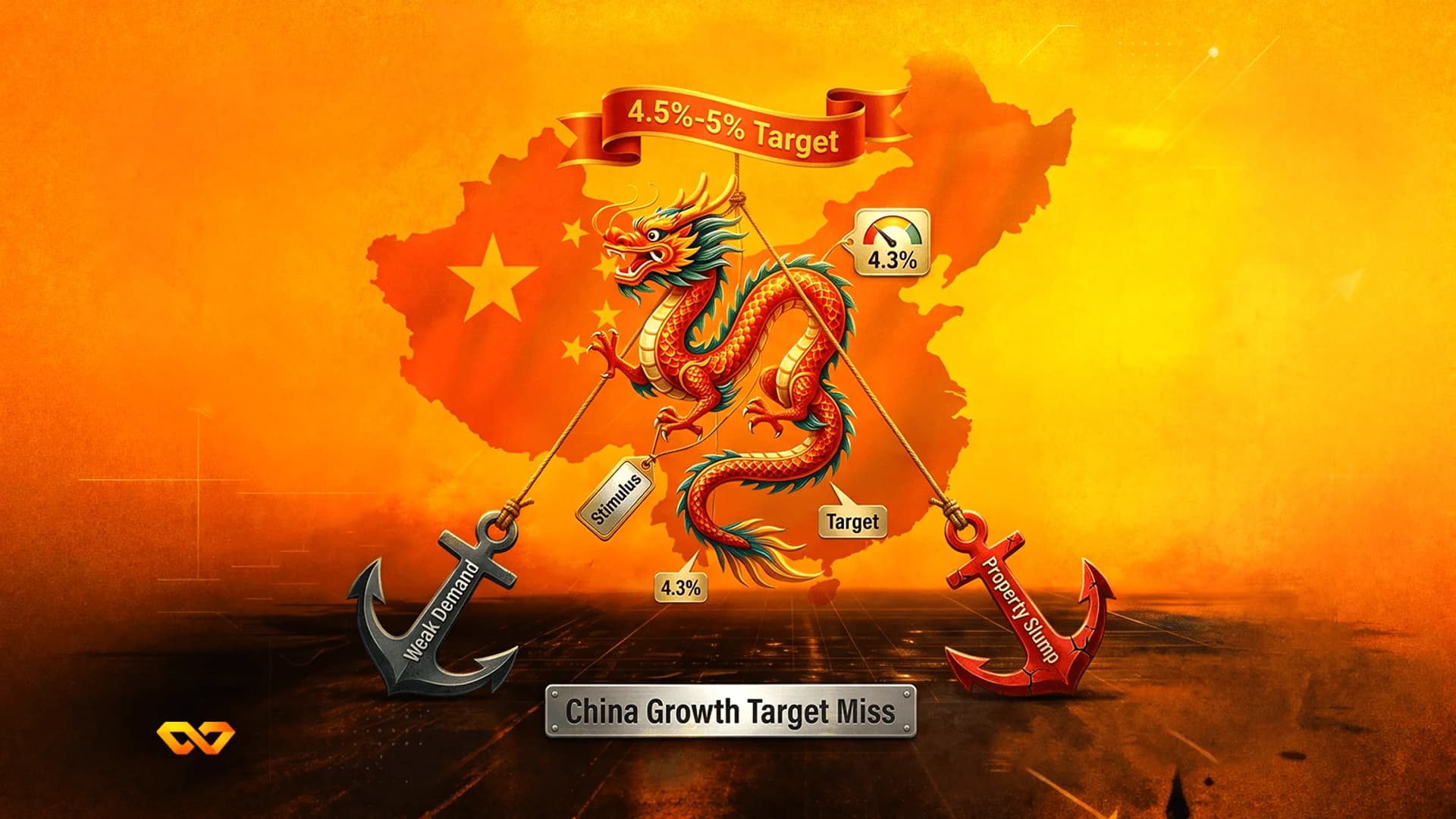
Amid rising geopolitical tensions in the Middle East, the Chinese economy faces mounting structural challenges that threaten the stability of global supply chains. China's economic growth fell sharply, missing the official government targets. According to reports, weak domestic demand and the impact of the Iran war on oil prices overshadowed what had otherwise been a strong export performance.
This slowdown arrives at a sensitive juncture, as previous data showed China's Consumer Price Index (CPI) grew by only 1% year-on-year in July, missing the 1.1% forecast per market data. The country is grappling with clear deflationary pressures, evidenced by a -0.3% monthly inflation rate, reflecting weak consumer purchasing power compared to a 4.1% rise in the Producer Price Index (per market data).
Traders should monitor upcoming data closely, especially as energy price volatility persists due to regional conflicts. Historically, China's failure to meet growth targets often triggers stimulus measures from the central bank.
Latest Updates · 1
- Notable·
Update: Pressure on the Chinese economy intensified as retail sales growth turned negative in May for the first time since the pandemic era, deepening concerns over domestic consumption. Furthermore, new home prices fell 3.3% year-on-year in June, while the real residential property price index dropped below levels recorded two decades ago.