
China Sets 60tn Yuan Retail Sales Target for 2030 to Boost Domestic Demand
Key Facts
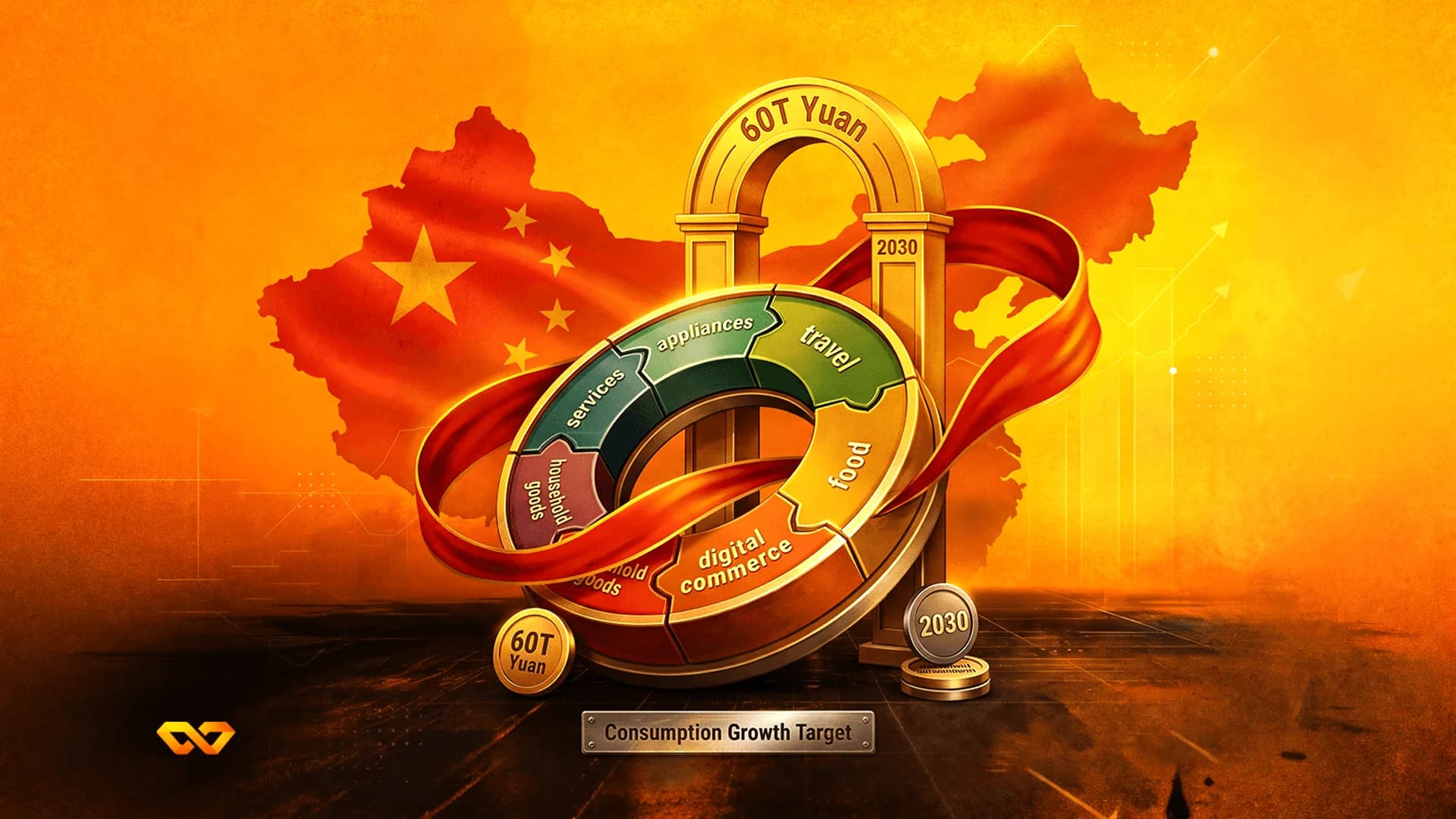
In a strategic move to rebalance the economy away from export-led industrial growth, China's State Council has approved a plan targeting total retail sales of consumer goods to reach 60 trillion yuan (approximately $8.84 trillion) by 2030. The new strategy implies a deliberate slowdown in annual retail sales growth to around 3.7%, down from roughly 5% in the previous period. This shift focuses on raising household consumption's share of GDP and pivotally boosting spending in service sectors such as healthcare and tourism to address weakening momentum in traditional goods spending.
This initiative arrives as the world's second-largest economy grapples with structural challenges and persistent deflationary pressures. Recent earnings reports from Chinese retail giants like Alibaba and JD.com have highlighted inconsistent revenue growth, reflecting cautious consumer sentiment amid the ongoing property sector crisis. Per market data and sector comparisons, China's private consumption as a percentage of GDP remains significantly lower than that of the United States and European peers, prompting this long-term structural intervention.
Traders should closely monitor upcoming economic indicators to gauge the plan's early impact, specifically China's Inflation Rate and CPI YoY data scheduled for release on July 9, 2026. These figures will provide essential insight into domestic purchasing power.