
Refining Margins Hit Record Highs as Crude Prices Retreat to Pre-War Levels
Key Facts
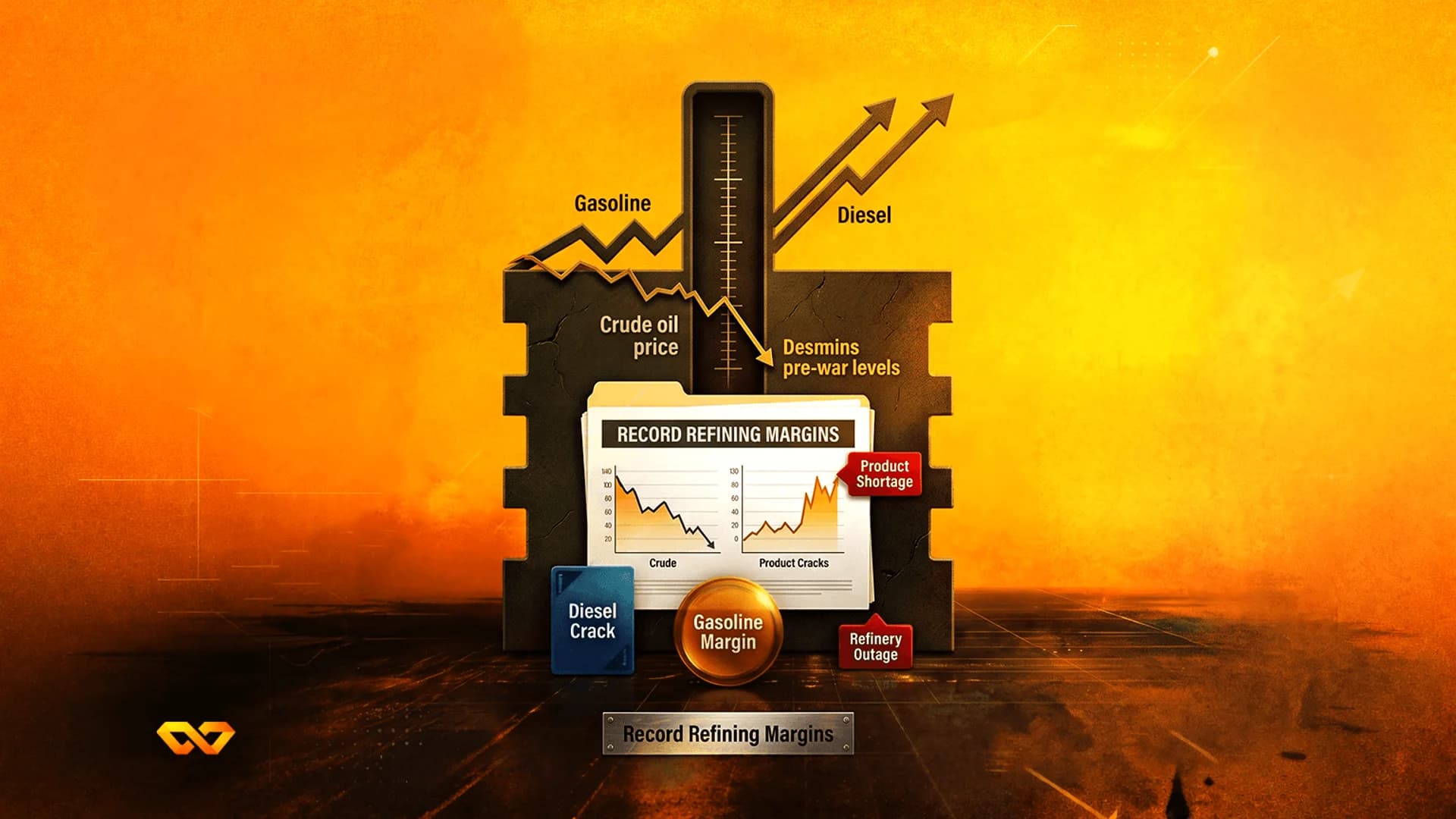
In a sudden shift for energy markets, crude oil prices have retreated to erase gains made following recent geopolitical tensions, returning to pre-war levels. According to analyst reports, this decline in crude costs has not been mirrored in final fuel prices, leading to a widening price gap favoring refiners. The U.S. 3-2-1 crack spread reached an unprecedented record high, exceeding $60 per barrel, signaling a profitability surge in the downstream sector despite the cooling of crude prices.
This price divergence reflects a market imbalance where input costs for refineries have dropped while petroleum product prices remain elevated due to global refining capacity constraints. Comparing the performance of energy majors like ExxonMobil and Chevron, market data suggests a shift in focus from crude exploration to refining operations as the primary profit driver. Analysts at the Wall Street Journal note that persistent high fuel prices despite falling crude continue to exert inflationary pressure on consumers.
Traders are now looking toward the EIA Weekly Petroleum Status Report on July 8, 2026, to assess gasoline and distillate inventory levels supporting these high margins. The market will also monitor the FOMC Minutes on the same day to gauge the impact of dollar strength on energy costs. With crude prices stabilizing at current levels, refining margins remain the critical metric for monitoring energy sector equity performance in the near term.