
NZ Business Confidence Jumps to 12% as Economic Outlook Improves
Key Facts
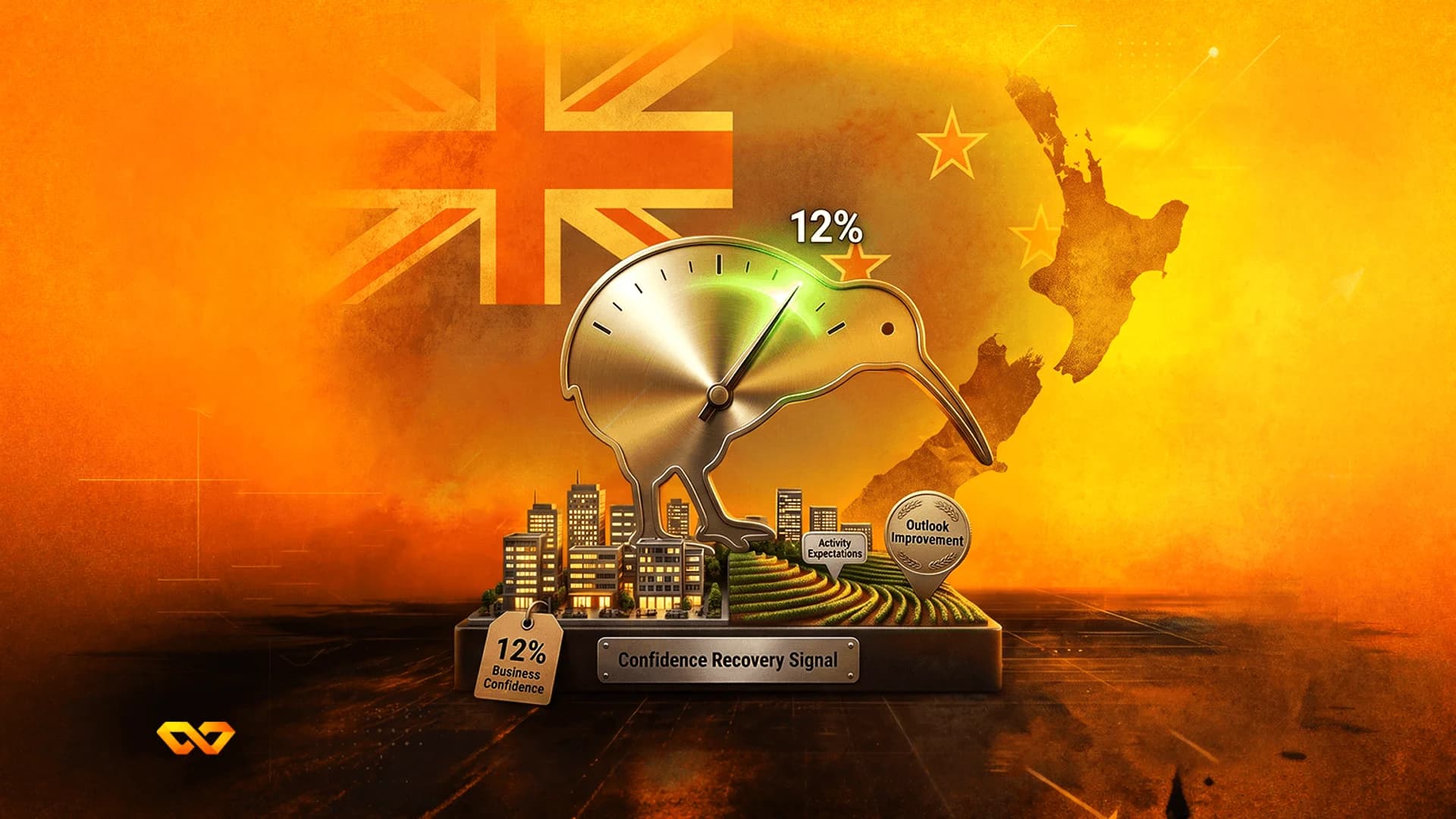
Amid a complex economic landscape balancing recovery signs with inflationary risks, the seasonally adjusted NZIER survey revealed a significant boost in corporate sentiment. Business confidence climbed to a net 12% of firms expecting improved economic conditions, up from just 1% in the previous period. This rebound was partly supported by a temporary easing in fuel prices, though it remains tempered by persistent cost pressures reported by over 50% of surveyed firms.
These figures arrive at a critical juncture for the Reserve Bank of New Zealand (RBNZ) as it navigates diverging regional trends; for instance, the Reserve Bank of Australia (RBA) maintained rates at 4.35% on July 7, 2026, per market data, while the stronger-than-expected NZ confidence data suggests a more cautious path toward monetary easing. Analysts are closely monitoring whether firms can absorb rising costs without stalling hiring and investment intentions, which still show signs of structural weakness.
Looking ahead, market participants are focused on the RBNZ interest rate decision scheduled for July 8, 2026, where rates are expected to be held at 2.5% following a prior move from 2.25%. The subsequent RBNZ press conference and the Business NZ PMI release will be vital catalysts in determining whether this rebound in confidence can be sustained in the face of elevated price pressures.