
China Crude Imports Hit Decade Low Amid Hormuz Supply Crisis
Key Facts
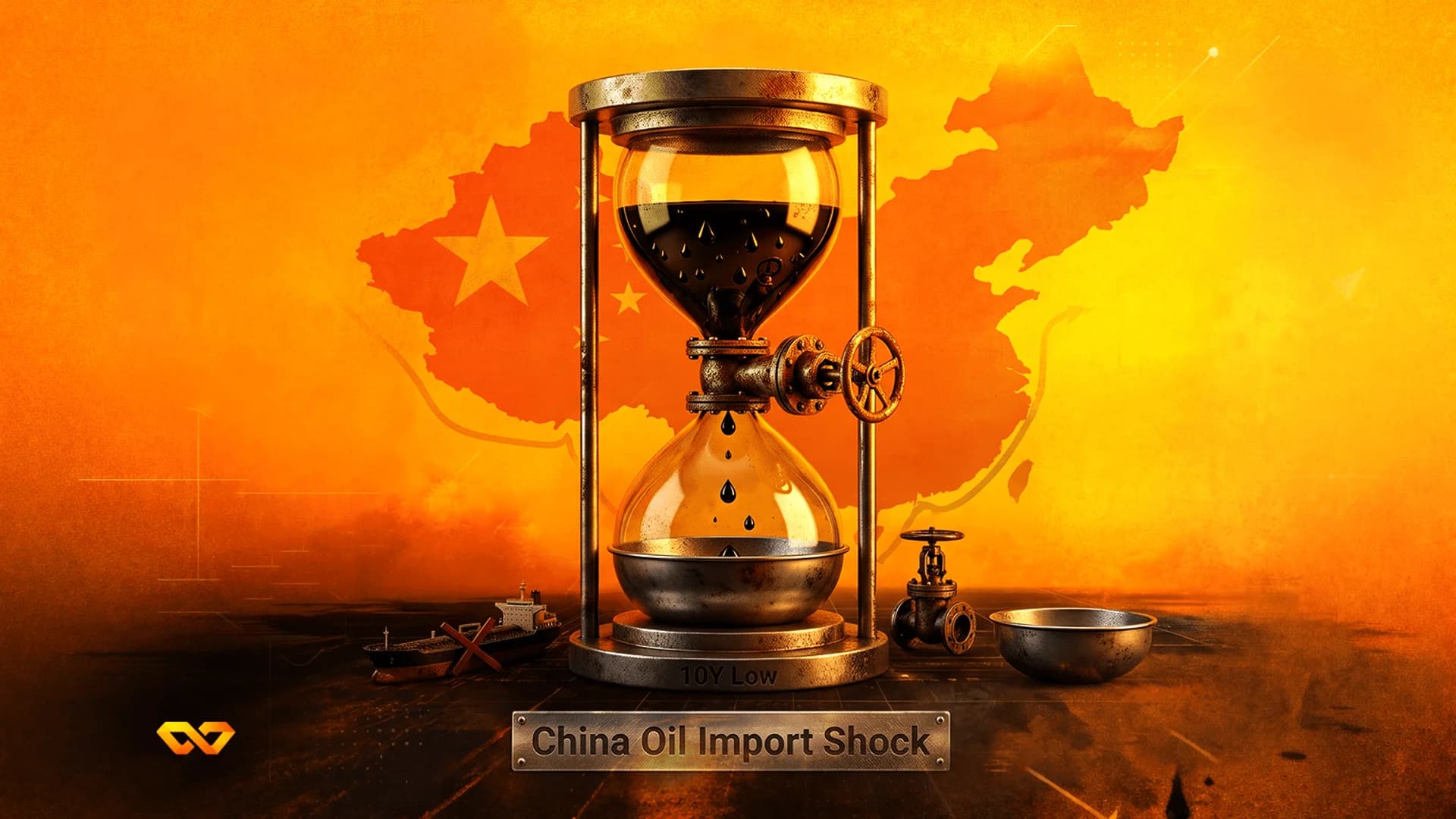
Amid escalating geopolitical tensions disrupting global energy flows, China's crude oil imports witnessed a dramatic collapse in June 2026. According to official Chinese customs data, imports plunged 41.3% year-on-year to 7.12 million barrels per day, marking the lowest volume since October 2016. This sharp decline is primarily attributed to the ongoing crisis in the Strait of Hormuz, which has restricted oil flows and driven prices to levels that have significantly curbed the appetite of Chinese refiners for expensive crude.
This slump comes as energy markets face dual pressures, with shipping disruptions in vital waterways leading to increased insurance and freight costs. Compared to previous years, this drop reflects a significant cooling in Chinese industrial demand, as earlier reports indicated that independent refiners have begun cutting run rates due to eroding profit margins. Per market data, the absence of robust Chinese buying is exerting downward pressure on Brent and WTI futures, despite the persistent supply-side risks stemming from the regional conflict.
Traders should closely monitor upcoming economic data from Beijing to assess the longevity of this demand slump, particularly the China Inflation Rate (CPI) and Producer Price Index (PPI) scheduled for release on July 9, 2026. Additionally, the market will look to the EIA Weekly Petroleum Report on July 8 for insights into global inventory levels and how the Middle Eastern supply disruptions are impacting the overall market balance.
Latest Updates · 1
- Notable·
Update: In a development reflecting persistent demand weakness, reports in July 2026 indicated that several Chinese refiners reduced their Saudi crude nominations for August, with at least two refiners requesting no term cargoes. This move comes as multiple refiners failed to receive provisional supply allocations, signaling a shift toward cheaper alternatives or reduced run rates amid tightening margins.