
Trump Proposes 20% Fee and Military Blockade on Strait of Hormuz
Key Facts
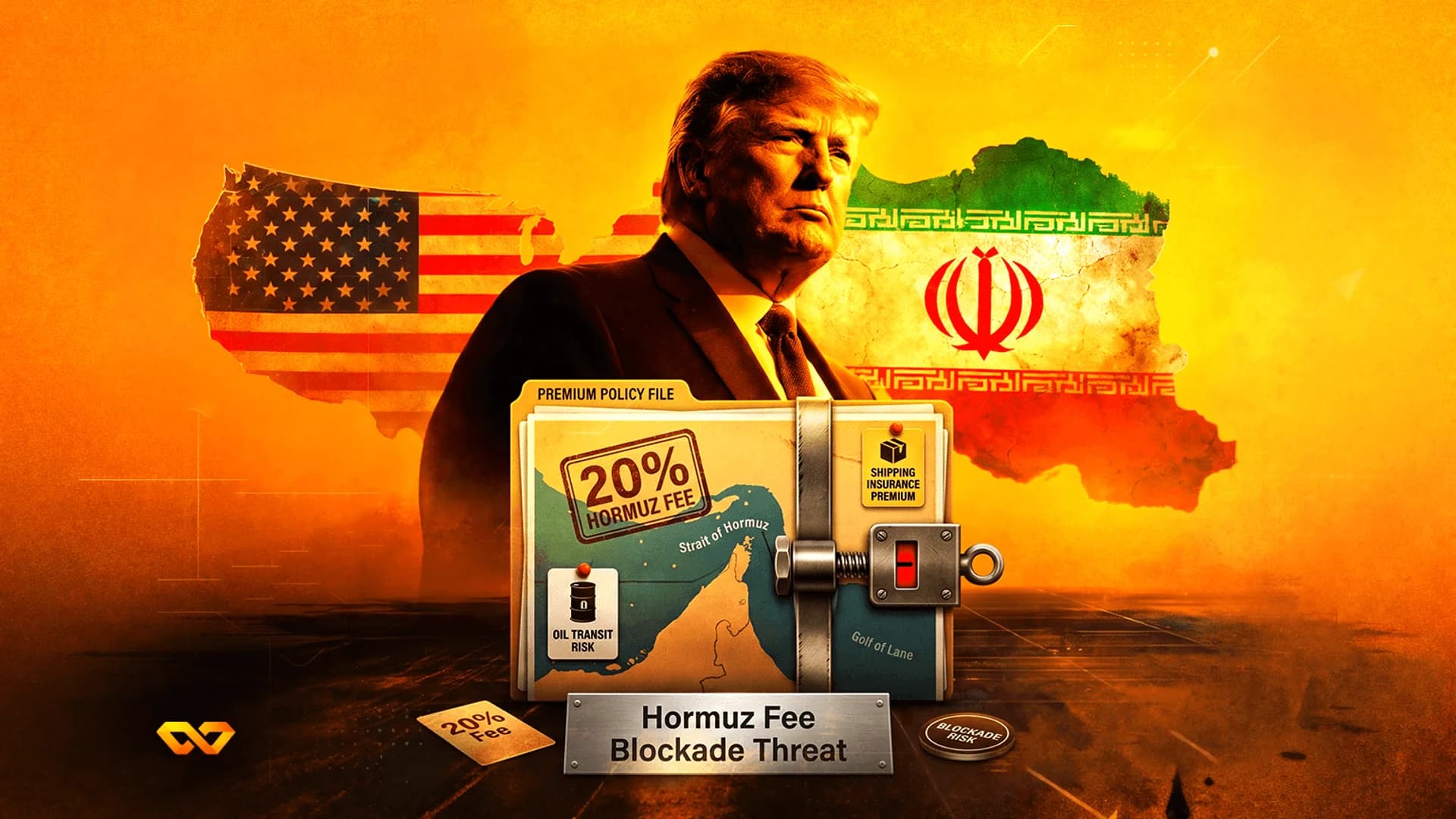
Amid escalating geopolitical tensions threatening global supply chain stability, Donald Trump has announced a proposal to impose a 20% fee on all cargo shipments passing through the Strait of Hormuz. According to reports, these proposed fees are intended to offset the military costs associated with reinstating a US blockade of the waterway. This move signals a potential shift toward aggressive trade and security policies in one of the world's most critical energy corridors.
The Strait of Hormuz is a vital artery through which approximately 20% of the world's total liquid petroleum consumption passes daily, per US Energy Information Administration (EIA) data. Energy analysts warn that any disruption to navigation in this passage could drive crude oil prices well above $100 per barrel, significantly higher than Brent crude's historical averages during stable periods. Compared to the 2019 tanker tensions, a direct 20% tariff would cause an immediate spike in global shipping and insurance costs.
Investors should closely monitor upcoming International Energy Agency reports and US trade balance data for official reactions. According to the economic calendar, the market awaits the API Crude Oil Stock Change on July 7, 2026, followed by the EIA Weekly Petroleum Report on July 8, as these data points will be critical in assessing how current geopolitical threats are impacting global energy supply levels.