
Trump Imposes 20% Hormuz Transit Fee; South Korean Chip Stocks Plunge
Key Facts
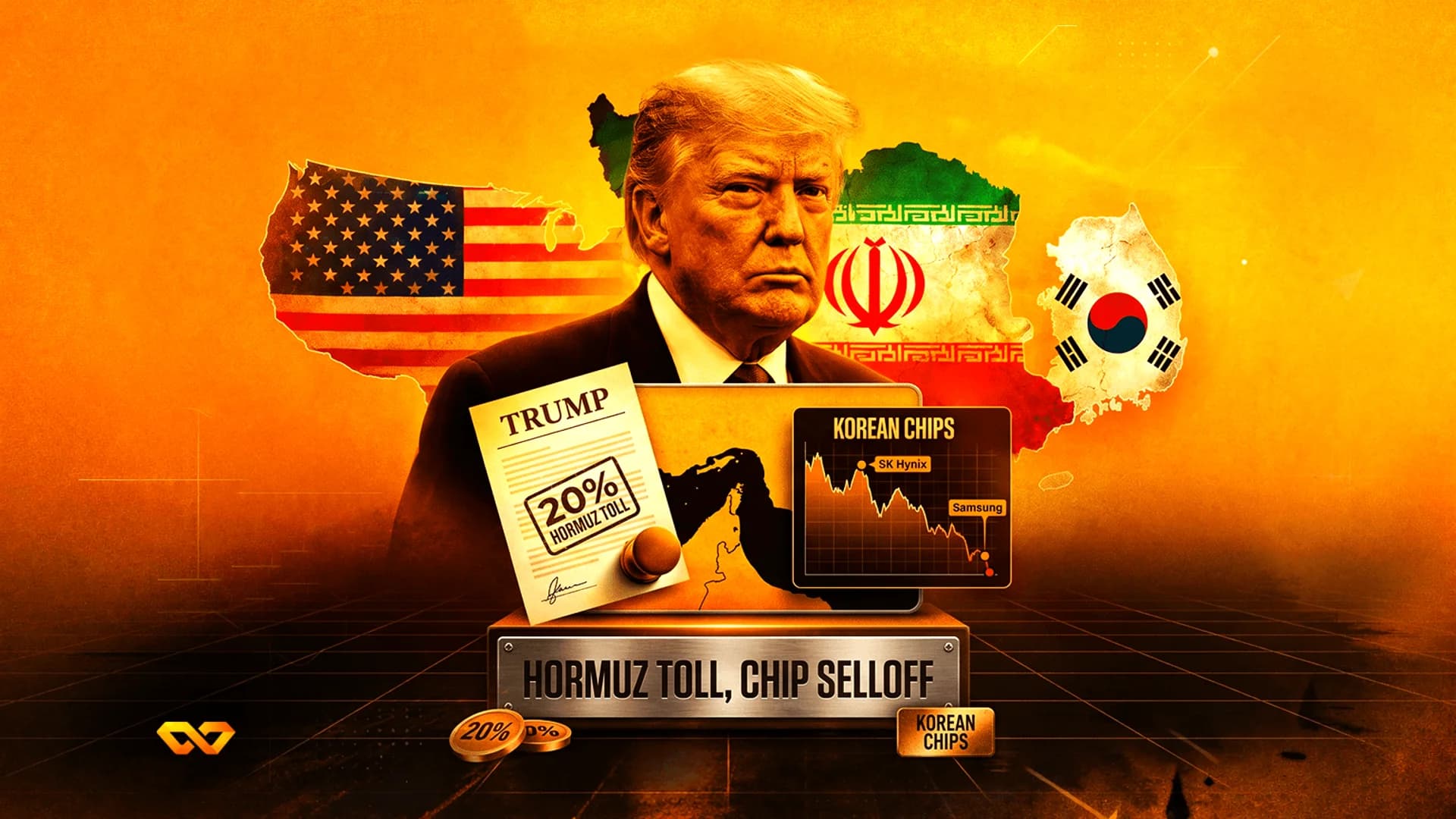
In a move reflecting a significant escalation in geopolitical and trade policy, President Trump has imposed a 20% reimbursement fee on all cargo passing through the Strait of Hormuz. According to reports, the fee is framed as a reimbursement for U.S. military protection in the region, sparking immediate concerns regarding global energy costs. This pressure resonated sharply across Asian markets, where the Kospi Index plunged 9% dragged down by sharp declines in Samsung Electronics and SK Hynix.
This geopolitical shock arrives at a sensitive time for the global tech sector, as semiconductor stocks faced additional pressure following SK Hynix's U.S. market debut. Compared to peers, chipmakers in Taiwan and the U.S. saw similar volatility amid supply chain fears, with analysts at Goldman Sachs noting that shipping costs could rise to unprecedented levels due to these fees (per research reports). Markets are also weighing the impact on crude oil flows, especially as the U.S. trade deficit reached $77.6 billion according to trade balance data released on July 7, 2026.
On the economic front, markets are awaiting China's inflation data on July 9, 2026, which may provide signals regarding demand levels in the world's second-largest economy. Additionally, the EIA Weekly Petroleum Report scheduled for July 8, 2026, will be a critical catalyst for assessing how Hormuz tensions are impacting oil supply.