
Energy Market Divergence: Global Crude Demand Slumps as Refined Fuel Prices Remain High
Key Facts
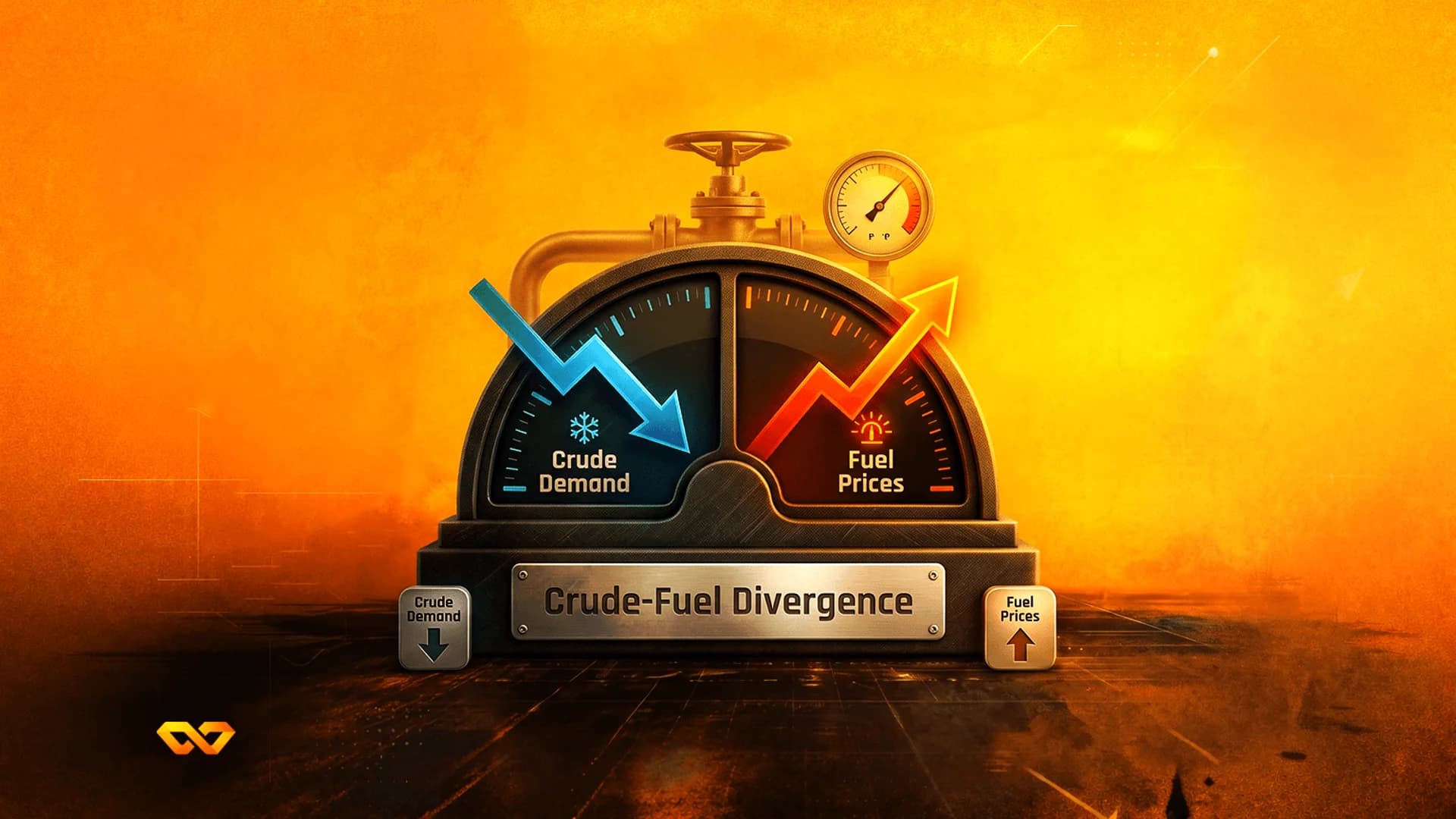
Amid rising concerns over a global economic slowdown, crude oil demand is experiencing a notable decline that has pushed futures prices lower, yet this drop has not reached end-consumers. According to reports, gasoline and diesel prices remain at elevated levels due to refining-related factors, despite the general weakness in market fundamentals. In a striking development, the United States bucked this global trend by recording an increase in gasoline consumption during the second quarter of 2026, providing partial support to domestic prices.
Experts attribute this divergence to a global shortage in refining capacity, which has widened the margins between crude oil and refined product prices. Compared to the previous quarter, market data indicates that refining costs have kept fuel prices high even as Brent and WTI crude prices softened. Per market data, pressure on refineries in Europe and Asia continues to limit the supply of derivatives, maintaining inflationary pressure on the transport sector despite the falling cost of the raw commodity.
Looking ahead, traders are analyzing the outcomes of the OPEC meeting held on July 5, 2026, to gauge any production quota shifts that might impact market balance. Markets are also awaiting official crude inventory data from the U.S. Energy Information Administration, following API reports on July 7, 2026, which showed a stock change of -0.399 million barrels. demand as a primary catalyst for price stability.