
Trump Administration Proposes Repeal of 702 Regulations in Major Deregulation Push
Key Facts
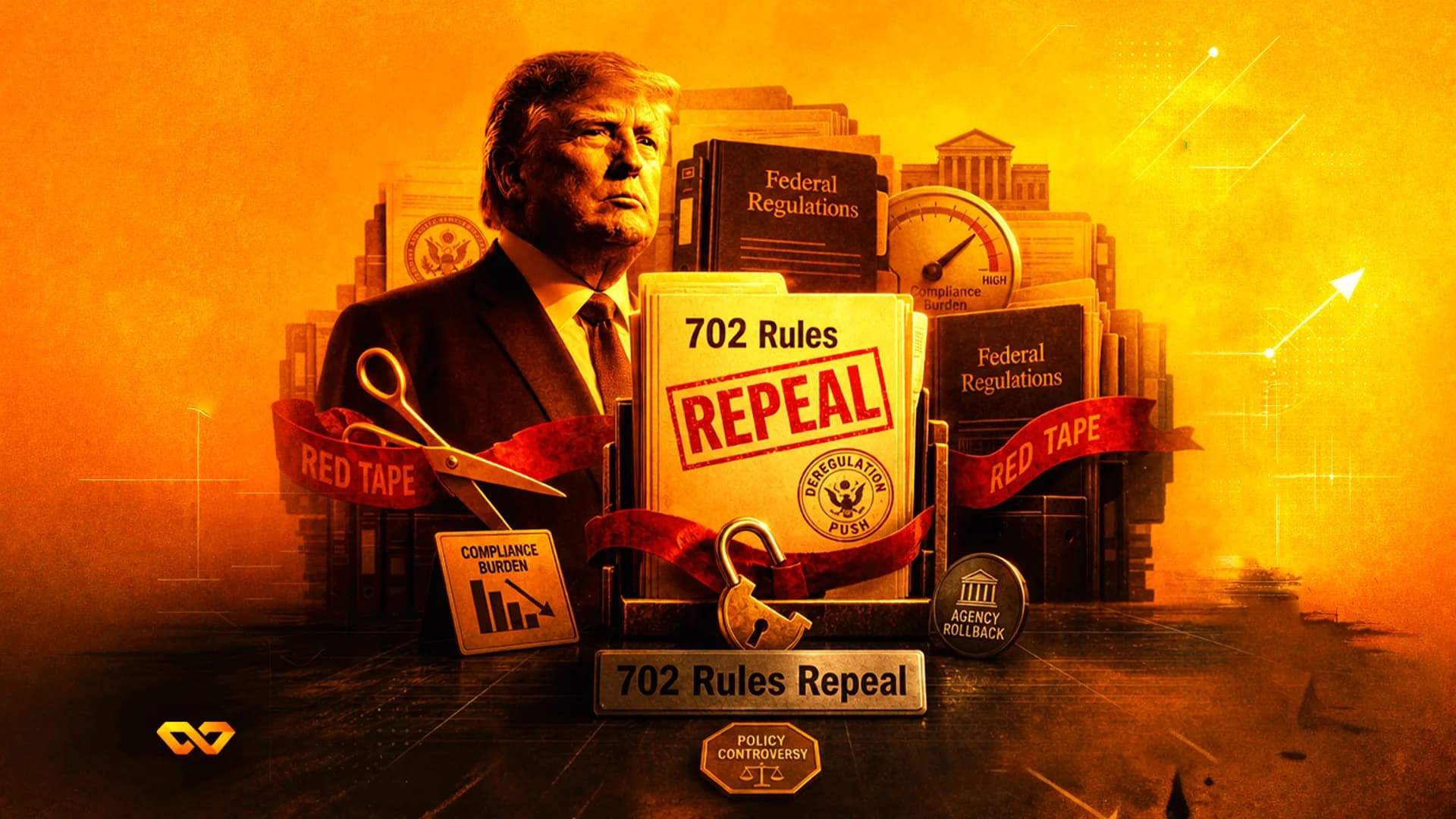
In a move reflecting a staunch commitment to campaign promises of reducing bureaucracy, the Trump administration has formally proposed the elimination of 702 federal regulations. This initiative is part of a broad deregulation strategy primarily aimed at lowering compliance costs and stimulating economic activity. According to reports, the move seeks to curtail direct oversight imposed by federal agencies on various productive sectors.
Historically, deregulation policies have been linked to boosting corporate earnings, with Cato Institute estimates suggesting that regulatory costs can exceed $2 trillion annually in the U.S. economy. Compared to previous eras, analysts view this volume of proposed repeals as one of the most ambitious efforts since the Reagan administration, potentially enhancing the competitiveness of small and medium-sized enterprises burdened by complex environmental and financial rules.
In the markets, investors are monitoring how these decisions will impact major equity indices, as global markets remained stable earlier this week per market data as of July 4, 2026. Looking ahead at the economic calendar, attention will turn to the upcoming speech by the Fed's Barkin for any commentary on how new fiscal policies might influence inflation and growth forecasts.