
Russia Faces Severe Fuel Crisis as Drone Strikes Disable 25% of Refining Capacity
Key Facts
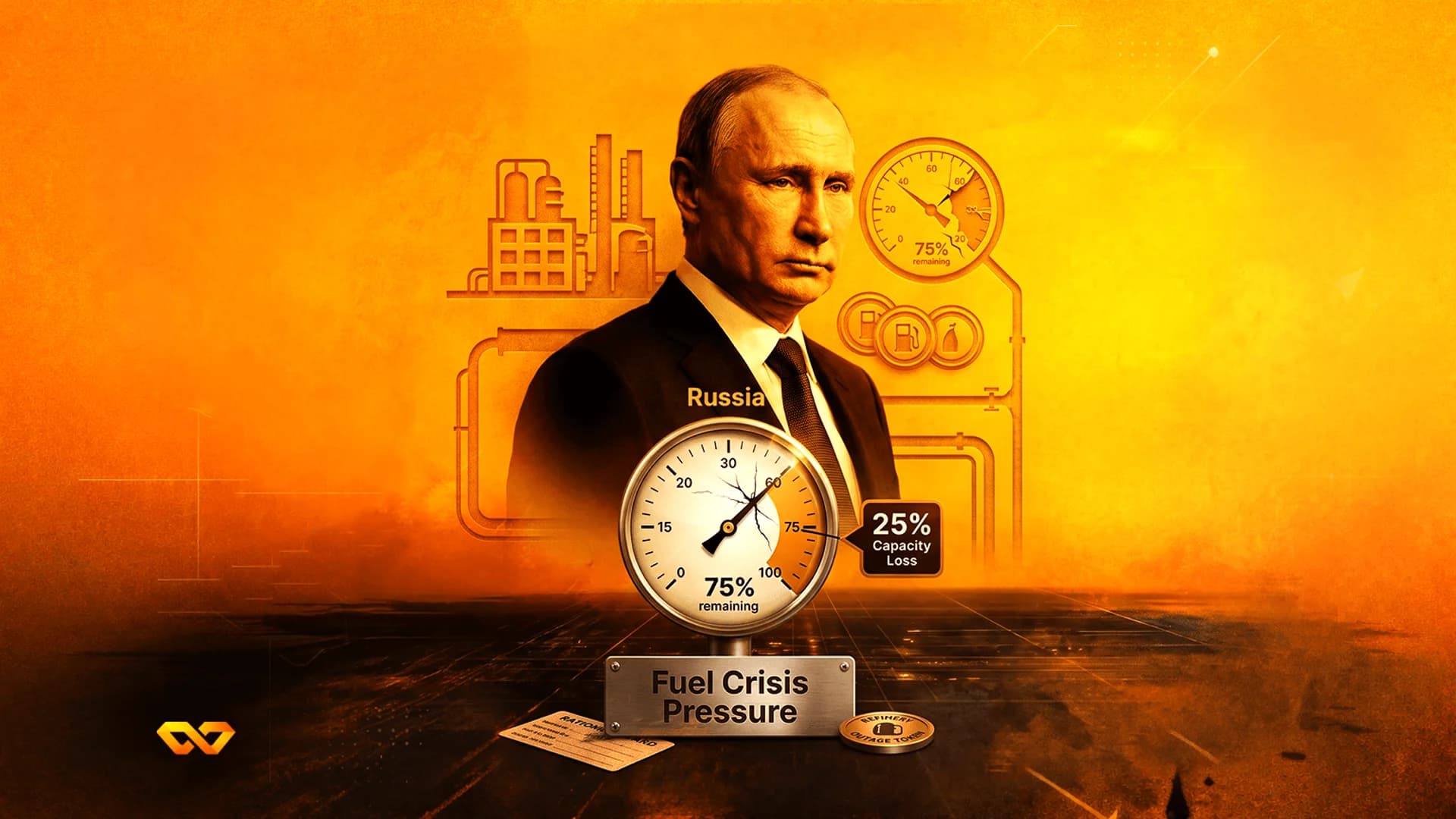
The Russian energy sector is facing mounting pressure as targeted strikes on critical infrastructure threaten domestic supply stability. According to energy analysts, an estimated 25% or more of Russia’s oil refining capacity has been taken offline following a series of Ukrainian drone attacks. This significant drop in processing capabilities has triggered a severe domestic fuel shortage, with reports indicating that citizens are facing wait times of up to 18 hours at gas stations.
These disruptions occur at a sensitive time for global energy markets, raising concerns over a potential reduction in Russian petroleum product exports. Compared to previous quarters, experts at S&P Global suggest that refinery targeting represents a strategic shift directly impacting Russian sovereign revenues. Per market data, the continued incapacitation of these facilities could drive global oil prices higher as supply concerns intensify across international markets.
Traders should closely monitor geopolitical developments and their impact on crude prices, as markets remain on high alert for any official response or emergency measures from Moscow. Looking at the economic calendar, upcoming inflation data in Europe, such as the Spanish CPI scheduled for June 29, 2026, may influence broader market sentiment regarding energy costs. Investors are also watching Lagarde’s speech on the same day for insights into monetary policy shifts linked to price pressures.