
UK Economic Activity Contracts in June as Composite PMI Misses Expectations
Key Facts
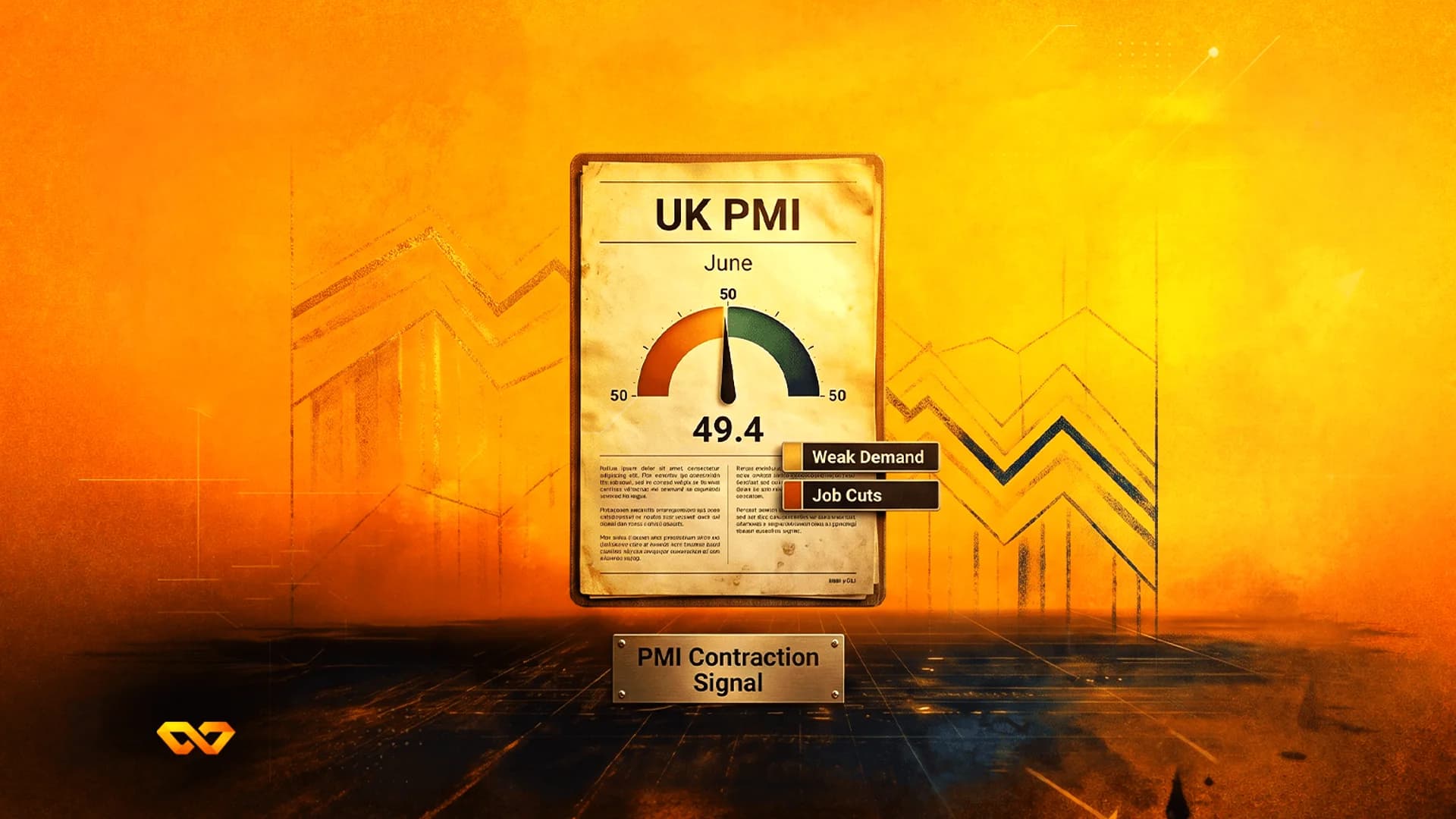
Amid persistent inflationary pressures and cooling demand, the British economy faced a fresh setback at the end of the second quarter. The UK composite Purchasing Managers' Index (PMI) for June arrived at 49.3, missing market expectations. This reading, which remains below the neutral 50.0 threshold, indicates a contraction in the combined output of the manufacturing and services sectors, signaling deepening economic weakness.
This contraction follows recent official data showing a slowdown in other growth engines; the annual Gross Domestic Product (GDP) grew by only 0.9% per market data released on June 30, 2026, falling short of the 1.1% forecast. In comparison to other major economies, China showed more resilience during the same period with a manufacturing PMI of 50.6, placing the UK economy in a challenging position relative to its global peers.
Investors should closely monitor the British Pound and domestic equities following these bearish signals. Looking ahead at the economic calendar, upcoming data on consumer credit and mortgage approvals will be critical in assessing the depth of the slowdown. Traders are also awaiting potential commentary from Bank of England officials to gauge the future path of monetary policy in the face of technical recession risks.