
Canada Plans New 1M Bpd Oil Pipeline to Pivot Exports Toward Asia
Key Facts
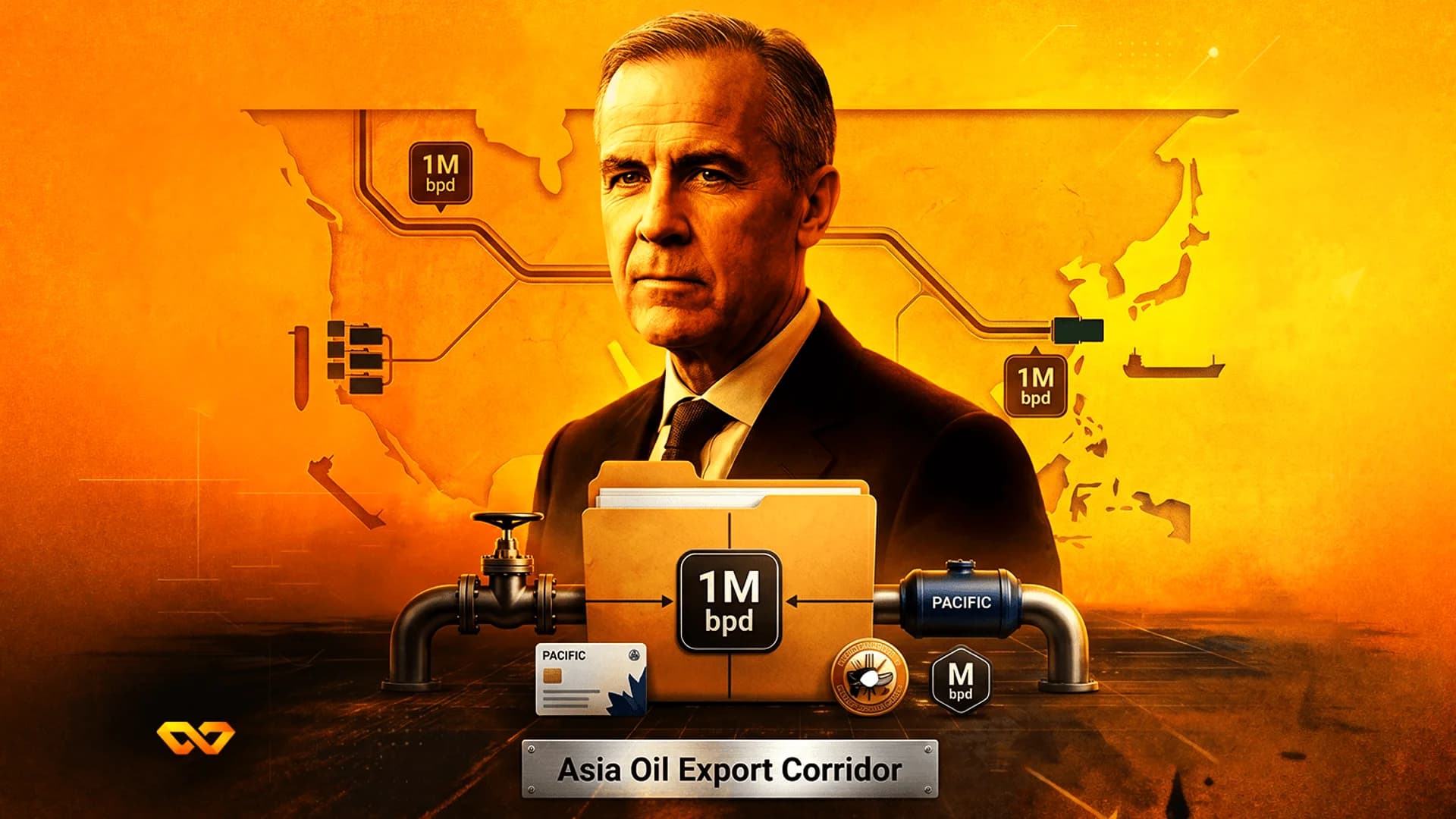
In a move reflecting Ottawa's desire to diversify energy export markets away from its southern neighbor, the Canadian government has unveiled ambitious plans for a new oil pipeline. The project aims to supply Asian markets with 1 million barrels per day, according to reports from the Financial Times. This initiative is part of a strategic push to reduce over-reliance on the United States, particularly amid ongoing trade hostilities that pose challenges to cross-border energy flows.
This shift comes as major Canadian energy firms like Enbridge and TC Energy seek to bolster their competitive edge, with market data showing relative stability in Western Canadian Select (WCS) prices compared to WTI benchmarks. Compared to the recently completed Trans Mountain expansion, this new project represents a significant leap in export capacity, as expert estimates suggest Asia could absorb a larger share of Canadian crude by 2030 to offset supply gaps from other regions.
Investors should monitor project developments alongside the release of the US Goods Trade Balance, which recorded a deficit of $105.8 billion (as of June 26, 2026), potentially influencing future trade policies. Additionally, markets are awaiting China's Manufacturing PMI data on June 30, 2026, which will serve as a key indicator for the strength of anticipated Asian demand for new Canadian energy exports.