
Jobs Shock: US Payrolls Slow Sharply to 57K in June 2026 as a 'Misleading' Unemployment Drop Masks Labor-Force Weakness
Key Facts
Who added jobs
- Education & HealthTop+69
- Professional & Business+36
- Construction+11
- Government+8
- Other Services+8
- Manufacturing+3
Who lost jobs
- Leisure & HospitalityWorst−61
- Information−9
- Trade/Transport/Utilities−4
- Mining & Logging−4
Companion indicators
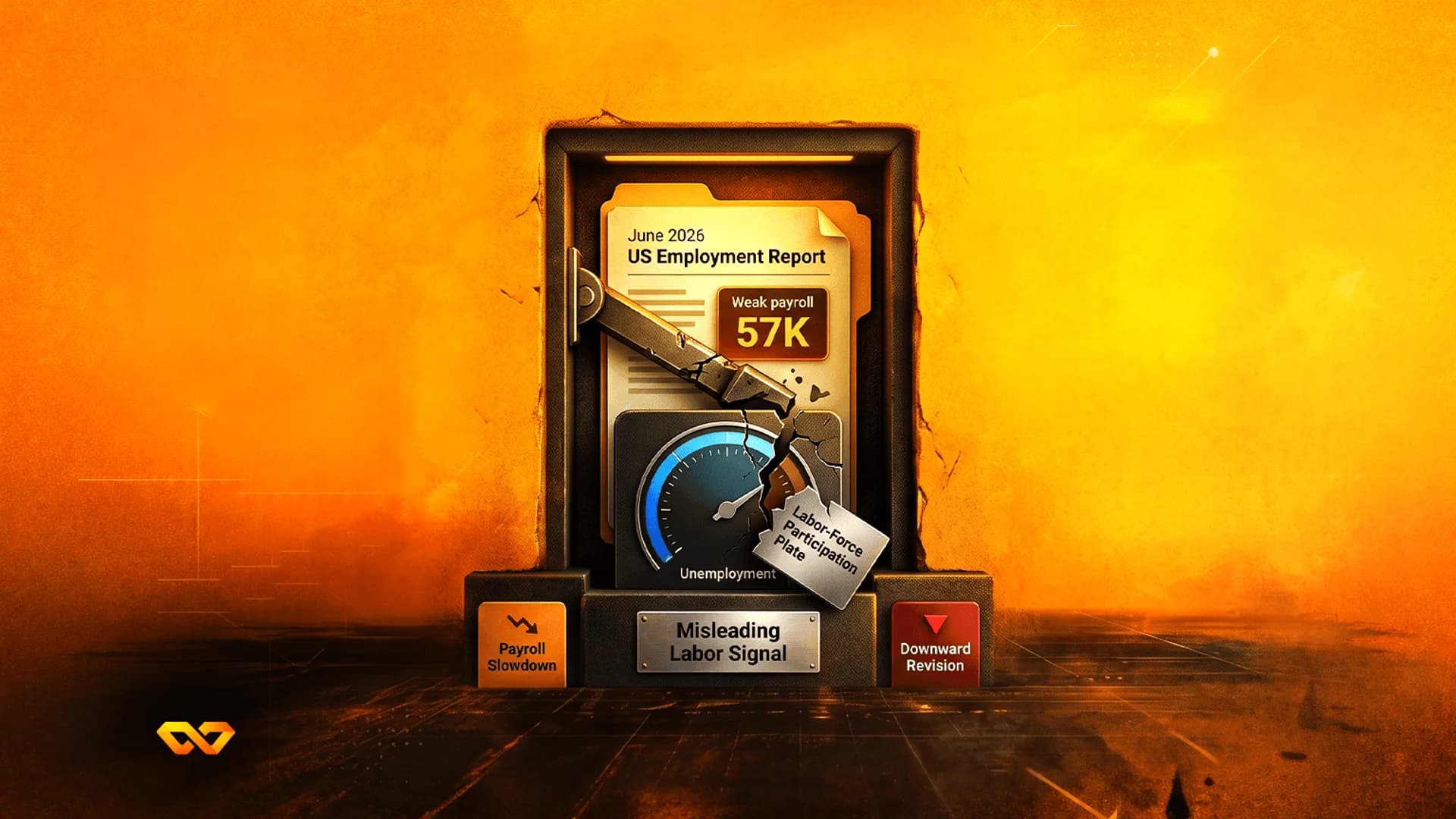
The US labor market slowed sharply in June 2026, adding a net of just 57K jobs — well below the 110K consensus and down markedly from May's 129K reading. The private sector accounted for 49K of the gain, with government adding 8K.
The report paints a complex, cautionary picture. The drop in unemployment to 4.2% is statistically misleading — it reflects a shrinking labor force as participation fell rather than genuine hiring strength, meaning the apparent improvement came from people leaving the workforce. This leaves the Federal Reserve with a dual dilemma: the sharp slowdown argues for faster rate cuts to avert a looming recession, while mild 3.5% annual wage growth keeps latent inflation pockets alive. Markets are pricing deeper easing that pressures the US dollar and temporarily supports bonds and risk assets, with attention turning to upcoming inflation data.