
Oil Prices Slip as Supply Fears Ease Over Strait of Hormuz Reopening
Key Facts
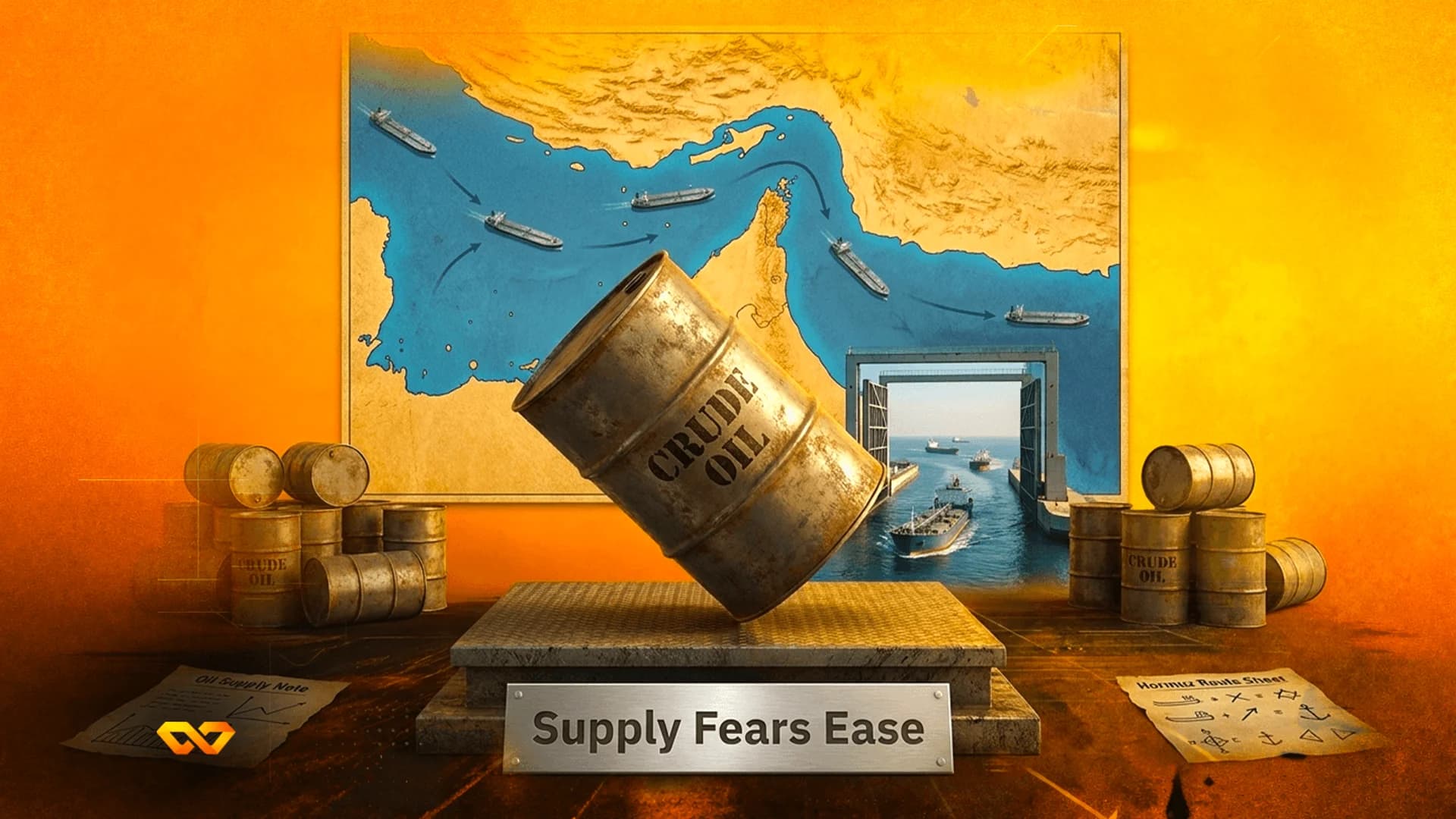
Amid a relative easing of geopolitical tensions, energy markets witnessed a reduction in the risk premiums that have recently supported prices. According to reports, oil prices fell in early Asian trade due to prospects of a fast reopening of the Strait of Hormuz. This decline is driven by easing supply concerns as market participants react to news suggesting a swift restoration of shipping traffic through the critical maritime chokepoint following previous disruptions.
This movement comes as markets closely monitor global production levels, with the OPEC Monthly Report released on June 11, 2026, highlighting a period of anticipation regarding supply-demand balances (per market data). Compared to major energy equity peers, crude prices faced selling pressure as logistical outlooks improved, aligning with investors trimming hedge positions established during the peak of the waterway's instability.
Traders should watch upcoming technical support levels, as sentiment is also being shaped by broader economic data, including the U.S. Producer Price Index which hit 1.1% on June 11, 2026. Looking ahead at the economic calendar, the market awaits official inventory data to assess the actual impact on supply, while focus remains on any official statements from maritime authorities regarding the final timeline for the full reopening of the Strait.
Latest Updates · 1
- Notable·
Update: Middle East shipping executives have confirmed that vessel transits through the Strait will resume very shortly, reinforcing expectations of an imminent resolution to logistical hurdles. Additionally, the 'Ghalibaf factor' has emerged as a significant political variable that analysts believe could influence the stability of oil flows and future pricing dynamics.