
Global Markets Slump as Fed Holds Rates with Hawkish Shift Under Kevin Warsh
Key Facts
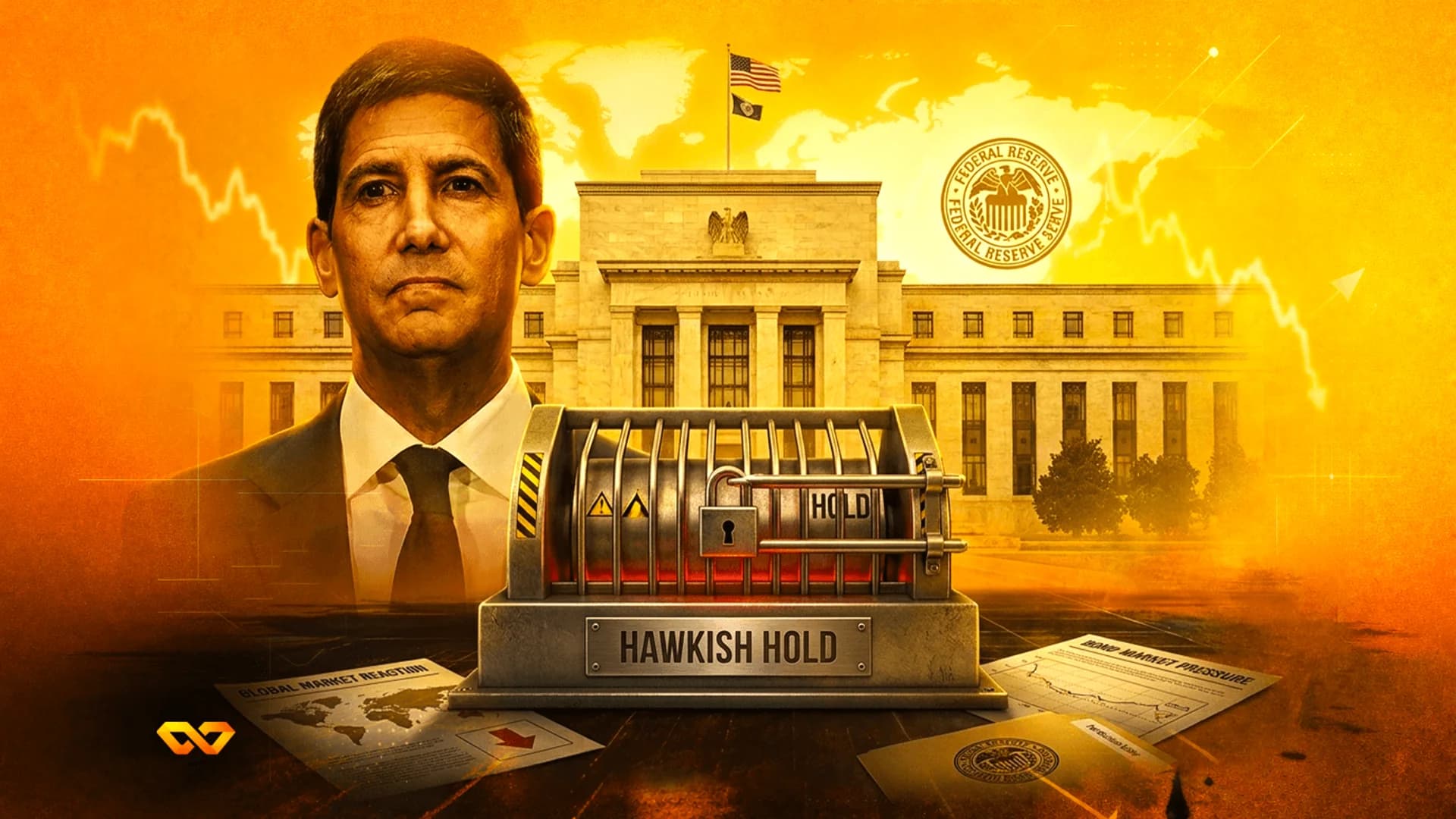
The Federal Reserve maintained interest rates at their current levels during the June 2026 FOMC meeting, marking a significant policy shift under the leadership of Chair Kevin Warsh. The Fed Chair surprised global markets by removing traditional forward guidance, signaling a transition to a framework strictly dependent on incoming economic data. This hawkish pivot without a clear roadmap triggered a slump across Wall Street and international markets as investors grappled with heightened uncertainty.
This policy shift occurs amid diverging global monetary trends, with the European Central Bank recently raising its interest rate to 2.4% on June 11, 2026, per market data. Domestic pressures also remain elevated, as the U.S. Producer Price Index (PPI) rose 1.1% month-over-month in June, significantly higher than the 0.7% forecast according to economic calendar data. These figures underscore the persistent inflationary environment that likely prompted the Fed's cautious yet firm stance.
Looking ahead, market participants will focus on upcoming Michigan Consumer Sentiment data and inflation expectations to gauge the Fed's next move. In the absence of forward guidance, economic indicators will serve as the primary catalysts for market volatility. Traders should remain alert to upcoming employment and inflation reports, as the central bank's new data-dependent approach means every data point could lead to significant shifts in interest rate expectations.
Latest Updates · 2
- Notable·
Update: The shift in monetary policy dynamics has extended to European markets as UK inflation data came in lower than expected, fueling bets on potential rate cuts by the Bank of England (BoE). Investors are now pivoting focus toward the upcoming policy meetings of the BoE and the Swiss National Bank (SNB) to assess global policy divergence against the Fed's hawkish stance.
- Notable·
Update: Selling pressure has extended to the British Pound, with the GBP/USD pair hitting key technical support levels on June 18, 2026. This decline comes as market participants await the Bank of England (BoE) interest rate decision, amid concerns that the central bank may adopt a hawkish stance similar to the U.S. Federal Reserve.