
US Tariff Revenue Fails to Cover Debt Interest Costs as Fiscal Gap Widens
Key Facts
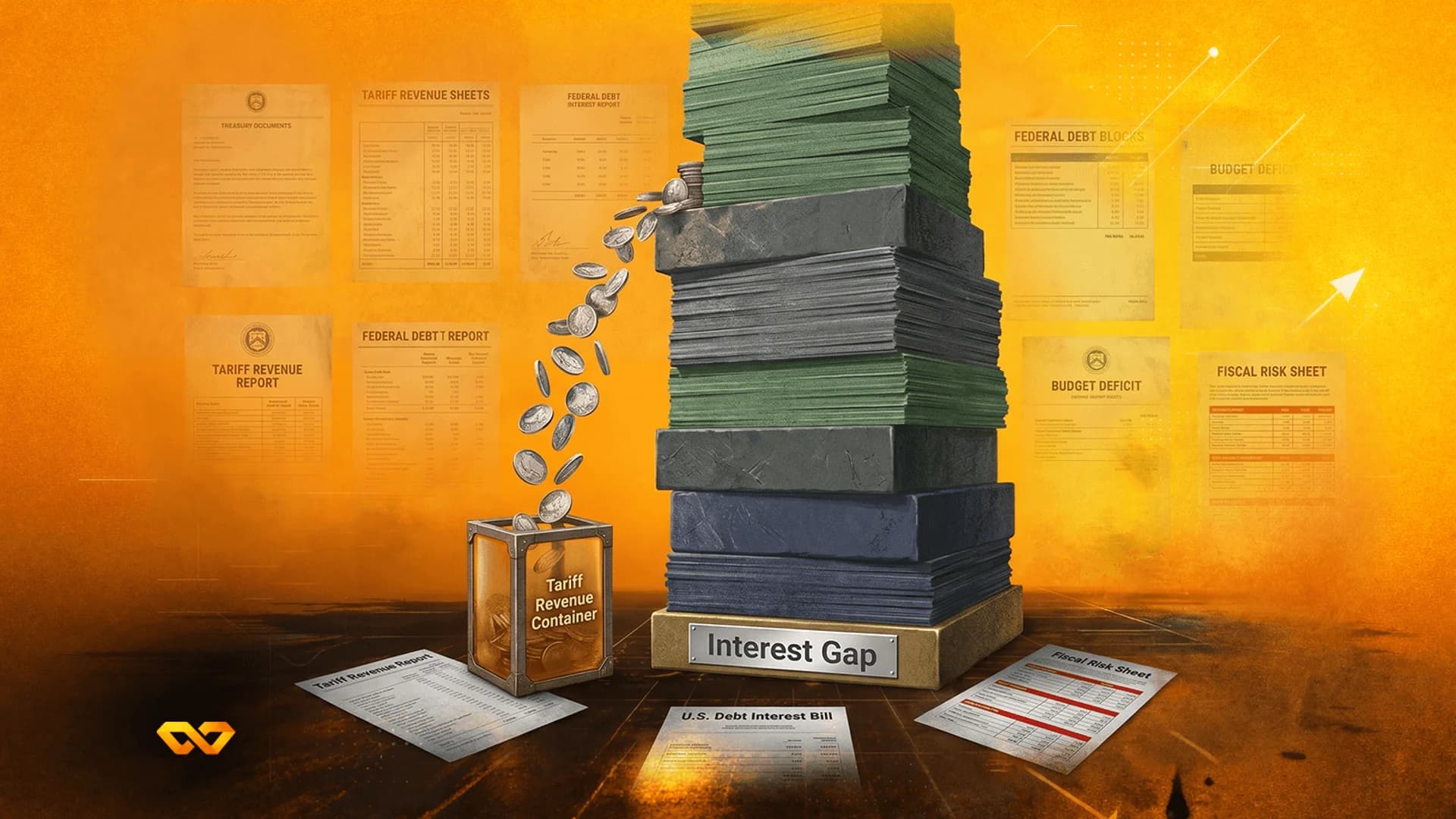
Amid intensifying debates over trade and fiscal policy in Washington, new structural challenges are emerging within the U.S. budget. The Congressional Budget Office (CBO) reported that the federal government spent $742 billion servicing the national debt between October and May 2026. According to reports, current tariff revenues are generating only 25% of the revenue needed to cover these escalating interest payments.
This shortfall coincides with a U.S. trade balance deficit of -$55.9 billion as of market data from June 9, 2026, questioning the efficacy of tariffs as a primary fiscal solution. Compared to previous cycles, rising interest rates have significantly compounded the debt burden, as evidenced by the Monthly Budget Statement on June 10, 2026, which showed a total budget deficit of $293 billion.
Traders should monitor fiscal sustainability as the Consumer Price Index (CPI) stood at 4.2% YoY as of the June 10, 2026 close, likely keeping borrowing costs elevated. Key upcoming catalysts include further inflation data and Fed commentary, which will be critical in determining the long-term trajectory of debt servicing costs and overall market stability.