
US PPI Inflation Surges Past Forecasts in May as Energy Costs Spike
Key Facts
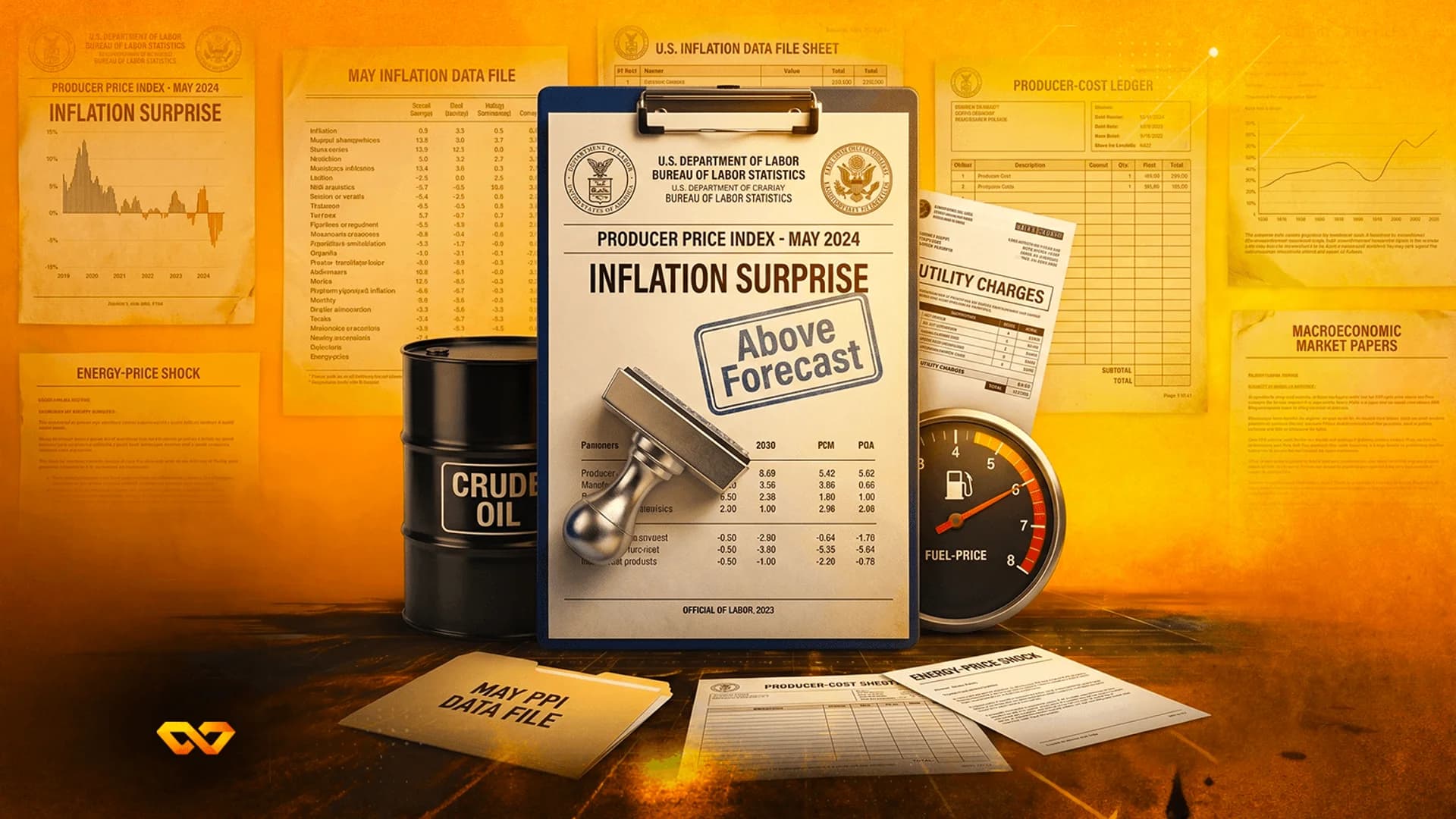
Reflecting persistent inflationary pressures within US supply chains, the Producer Price Index (PPI) rose 1.1% in May, significantly exceeding economist expectations of 0.7%. Wholesale inflation accelerated to 6.5% on a year-over-year basis, marking its highest reading since November 2022. The surge was primarily driven by a 10.7% jump in energy costs, representing the largest increase in final demand goods prices since 2009 according to the Bureau of Labor Statistics.
This data aligns with recent Consumer Price Index (CPI) figures which hit 4.2% year-over-year as of June 10, 2026, per market data, suggesting that high production costs are being passed through to consumers. In comparison to other major economies, China's PPI recorded a 3.9% increase during the same period, highlighting divergent global price pressures. Economists suggest that the strength of PPI data may force the Fed to maintain a restrictive monetary policy stance for longer than anticipated.
Traders should monitor core inflation levels, which stood at 2.9% at the close of June 10, 2026, as a gauge for underlying price stability. With few major catalysts in the upcoming economic calendar, focus shifts to potential commentary from Fed officials regarding the interest rate path. Markets remain watchful of whether the economy can absorb these price hikes without triggering a broader slowdown.