
SpaceX Hits $3T Market Cap to Overtake Microsoft Amid Retail Buying Frenzy
Key Facts
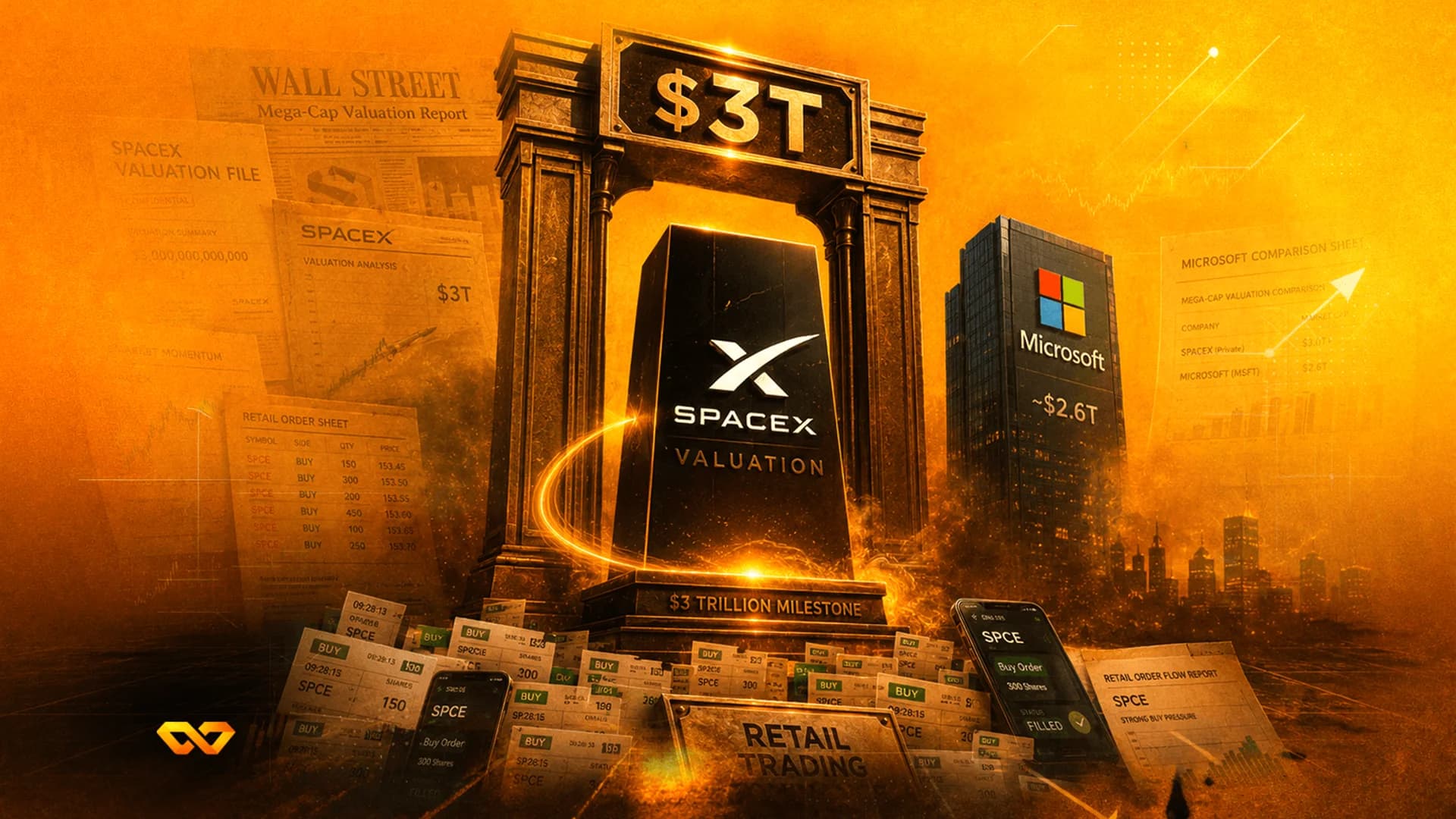
In a historic development reshaping the global leaderboard of public companies, SpaceX's market capitalization surged to $3 trillion in after-hours trading, overtaking Microsoft to become one of the world's most valuable entities. This meteoric rise was fueled by unprecedented retail momentum, with the ticker SPCX accounting for approximately 73% of all retail net buying across single stocks during the session. These figures underscore an extraordinary level of retail investor conviction following the company's recent initial public offering.
This new valuation elevates SpaceX to the pinnacle of the global tech sector, directly challenging Microsoft’s market cap of approximately $3.1 trillion per market data. This surge occurs against a backdrop of mixed global economic signals, including China's annual inflation holding at 1.2% on June 10, 2026, and a 2.9% drop in Australia's Westpac Consumer Confidence index on June 9, 2026. Such conditions have increasingly funneled liquidity into high-growth momentum assets, further propelling SpaceX's valuation.
Market participants are now bracing for the commencement of options trading for SPCX scheduled for tomorrow, a catalyst that could trigger further gamma squeeze momentum and heightened volatility. According to the economic calendar, upcoming U.S. retail sales data will be critical in assessing the broader sustainability of consumer purchasing power. As SpaceX explores these record price levels, focus shifts to whether the stock can maintain its $3 trillion floor amid the intense concentration of retail activity.
Latest Updates · 1
- Notable·
Update: SPCX shares extended their rally on the third day of trading with a 20% surge, recording the second-largest one-day market capitalization gain in U.S. history. This extraordinary performance solidifies the company's position at the forefront of the tech sector, surpassing historical records previously held by mega-cap peers.