
Delta Air Lines Cancels Hundreds of Flights Amid Severe US Thunderstorms
Key Facts
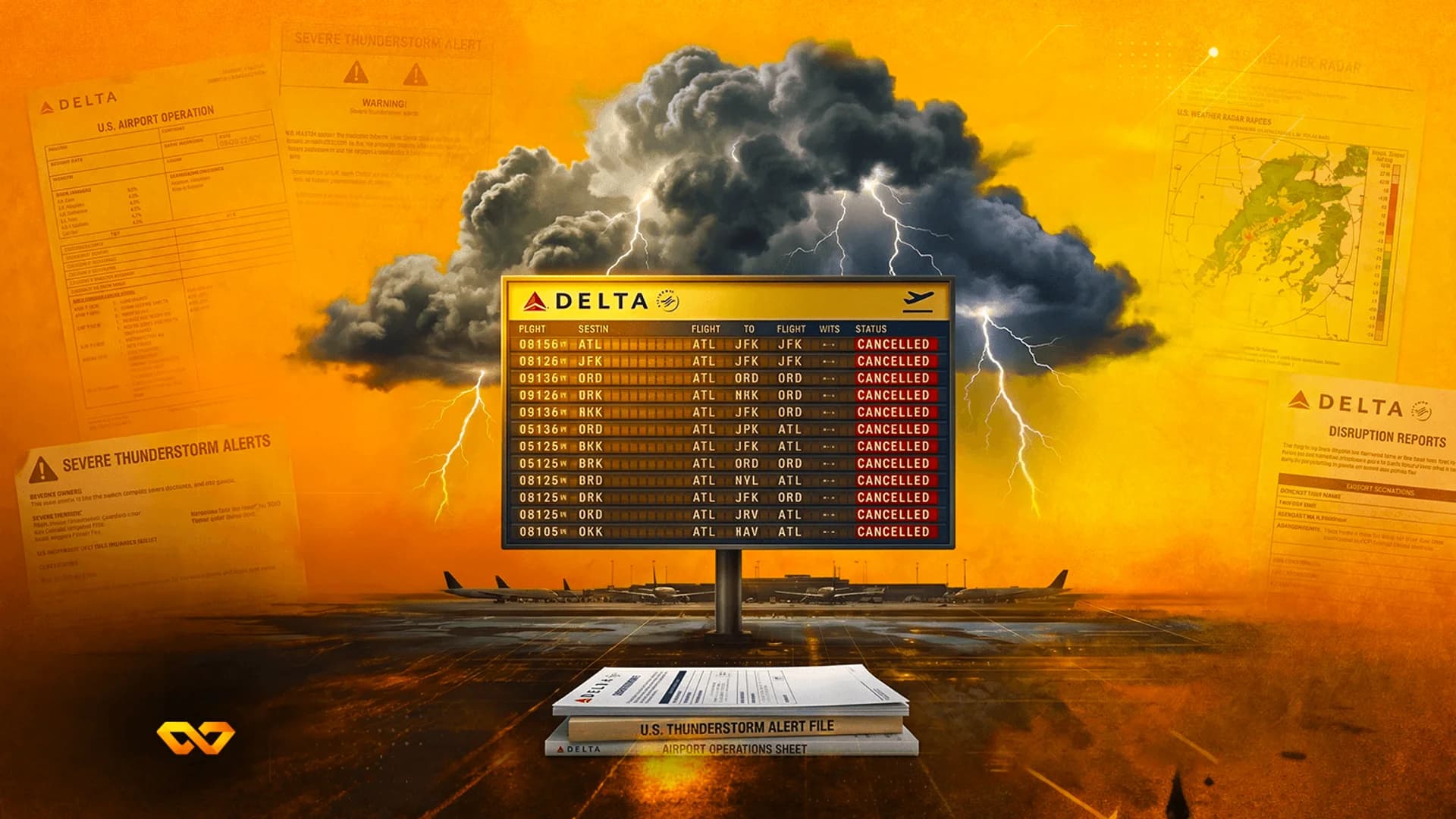
Amid severe weather patterns disrupting US aviation, Delta Air Lines has faced significant operational challenges leading to the cancellation of hundreds of flights. According to reports, these disruptions spanned a 48-hour period as thunderstorms impacted the airline's major operational hubs. The FAA intervened by implementing ground stops at LaGuardia Airport, further complicating the carrier's efforts to maintain its flight schedule.
These disruptions occur at a sensitive time for the aviation sector, as mass cancellations typically drive up operational costs and dampen consumer sentiment. In comparison to peers, carriers like United Airlines and American Airlines also faced similar delays across the East Coast, with FlightAware data indicating over 1,000 total flight cancellations across the US during the same window (per news reports). Investors are now monitoring Delta's ability to stabilize its schedule to mitigate financial losses from passenger rebookings.
In the markets, Delta's stock (0QZ4.L) stood at $82.99 (at close June 12, 2026), having hit a session high of $84.00. Traders should watch for upcoming US economic catalysts, specifically the Consumer Price Index (CPI) data, which could influence fuel cost expectations and broader consumer discretionary spending on air travel.