
Brent Crude Hits $92 as Israel-Iran Military Tensions Escalate
Key Facts
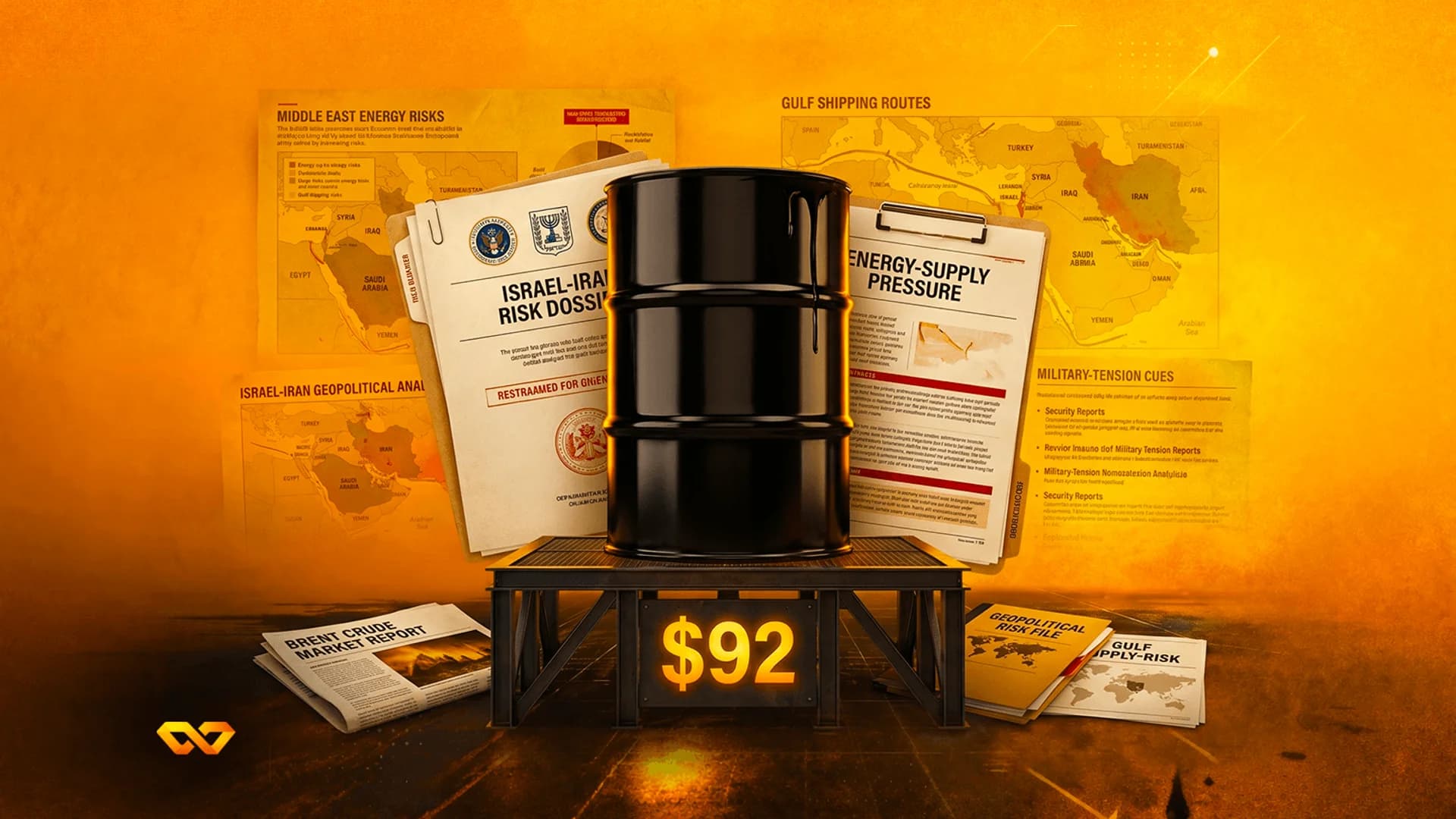
Reflecting the high sensitivity of energy markets to Middle Eastern geopolitical risks, Brent Crude prices surged to $92 per barrel. This spike was driven by the escalation of direct military strikes between Israel and Iran, which significantly increased the geopolitical risk premium. According to reports, Asian equities displayed mixed performance, while U.S. stock futures attempted a rebound amid the prevailing atmosphere of global uncertainty.
This escalation occurs at a critical juncture for global oil markets, as traders weigh the potential for supply disruptions through the Strait of Hormuz. Reaching $92 per barrel adds pressure to global disinflation efforts, particularly as market data showed Turkey's CPI at a high of 32.61% YoY as of June 5, 2026. Markets are also assessing the impact on industrial production costs, which recently showed a marginal 0.1% monthly growth in France per market data.
Technically, traders are monitoring oil's support and resistance levels following this breakout. Looking ahead at the economic calendar, focus remains on central bank commentary regarding energy-driven inflation. With the U.S. Unemployment Rate holding at 4.3% (as of June 5, 2026), demand resilience will be a key factor in determining whether oil can sustain its position above the $90 threshold in the coming sessions.
Latest Updates · 1
- Major·
Update: Geopolitical tensions have broadened as U.S. Central Command announced the completion of military strikes against Iranian targets, leading markets to price in a prolonged conflict. Analysts suggest this direct involvement could sustain the geopolitical risk premium in energy prices for longer than initially anticipated.