
Warsh Era Begins at Fed as Rate Hike Odds Surge to 68%
Key Facts
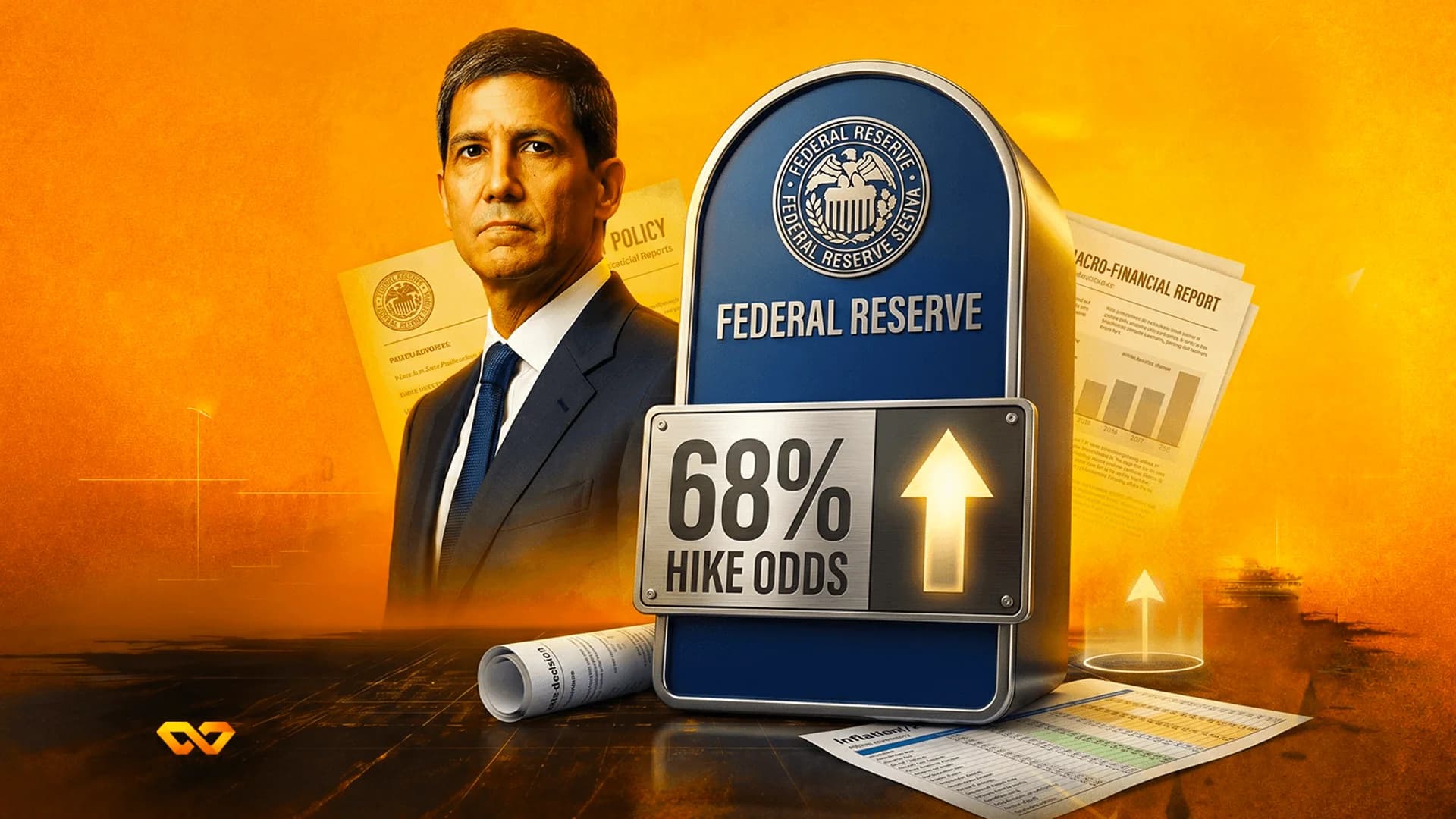
In a move marking a fundamental shift in US monetary policy leadership, Kevin Warsh was officially sworn in as the 17th Chair of the Federal Reserve on May 22, 2026. According to reports, this appointment coincided with a sharp pivot in market sentiment, as the odds of the central bank implementing a rate hike surged to 68%. These developments reinforce the hawkish outlook recently highlighted by Goldman Sachs regarding the persistence of elevated interest rates for longer than previously anticipated.
This escalation in rate expectations reflects growing pressure on the banking sector as markets gauge how Warsh will tackle inflation compared to his predecessor. Looking at peer performance, JPMorgan (JPM) shares closed at $312.37 and Morgan Stanley (MS) at $211.93 (close June 5, 2026), levels that reflect investor caution ahead of new policy signals per market data. This trend aligns with prior warnings from major institutions regarding persistent inflationary risks that may necessitate further tightening.
Traders are currently monitoring GS stock, which closed at $1,038.68 (close June 5, 2026), as it tests support levels near its recent low of $1,035.6. Regarding the economic calendar, all eyes will be on the first round of official communications under the new Fed leadership, alongside upcoming employment and inflation data that could push the 68% hike probability even higher.
Latest Updates · 1
- Notable·
Update: A robust May 2026 jobs report has triggered a sell-off in tech equities and pushed bond yields higher, further cementing hawkish expectations. Markets are now pivoting to upcoming inflation data, with concerns that a reading above the 4% threshold could prompt more aggressive action from the Fed.