
Trump Invokes Defense Production Act to Inject $700M into U.S. Coal Sector
Key Facts
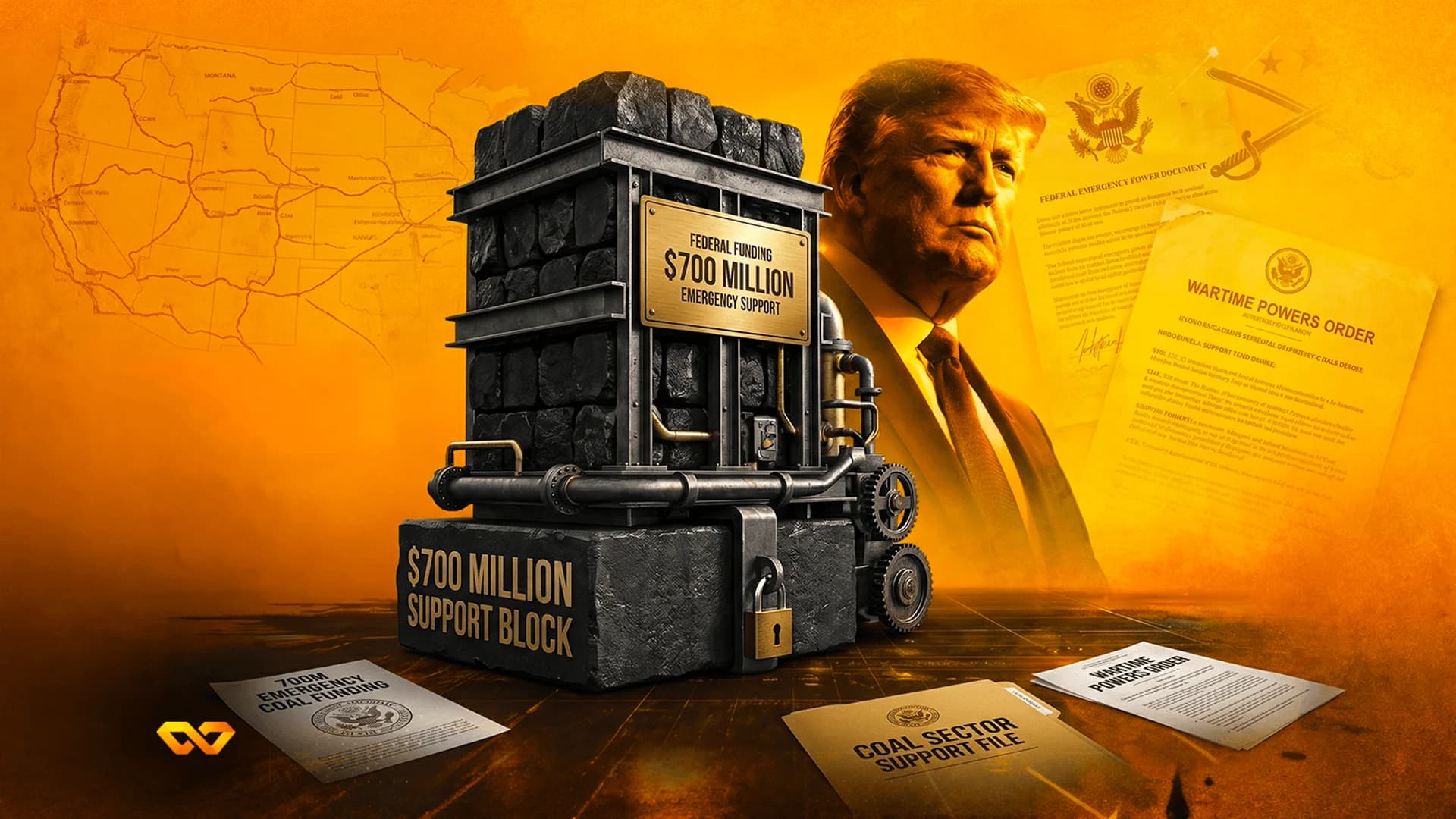
In a move reflecting a strategic shift to bolster traditional energy security and bypass local regulatory hurdles, the U.S. administration has decided to intervene directly in the fossil fuel sector. According to reports, the Trump administration is channeling $700 million into the U.S. coal industry by invoking the Defense Production Act. Specifically, $425 million will be distributed to 13 existing coal plants across West Virginia, Kentucky, and Indiana to prop up power generation, finance new construction, and open a long-blocked export terminal in California.
This federal support arrives as major coal players like Peabody Energy and Arch Resources face structural challenges from the global energy transition. Compared to broader energy sector performance, this liquidity injection aims to strengthen the balance sheets of domestic producers who have long struggled with West Coast export restrictions. Per market data, stimulating export infrastructure could open new Asian markets for U.S. coal, enhancing price competitiveness against global suppliers as China’s Manufacturing PMI remains steady at 51.8 (as of June 1, 2026).
Traders should watch for legal challenges from states opposing coal expansion, as well as the impact of this funding on industrial sector sentiment. According to reports, invoking wartime powers for energy subsidies may face judicial scrutiny that could delay construction projects. Markets also await Fed Chair Powell’s upcoming speech (per the economic calendar) for signals on financing costs that could influence long-term capital investments in the traditional energy sector.