
Bitcoin Suffers Sharpest Daily Drop Since February Amid US-Iran Military Strikes
Key Facts
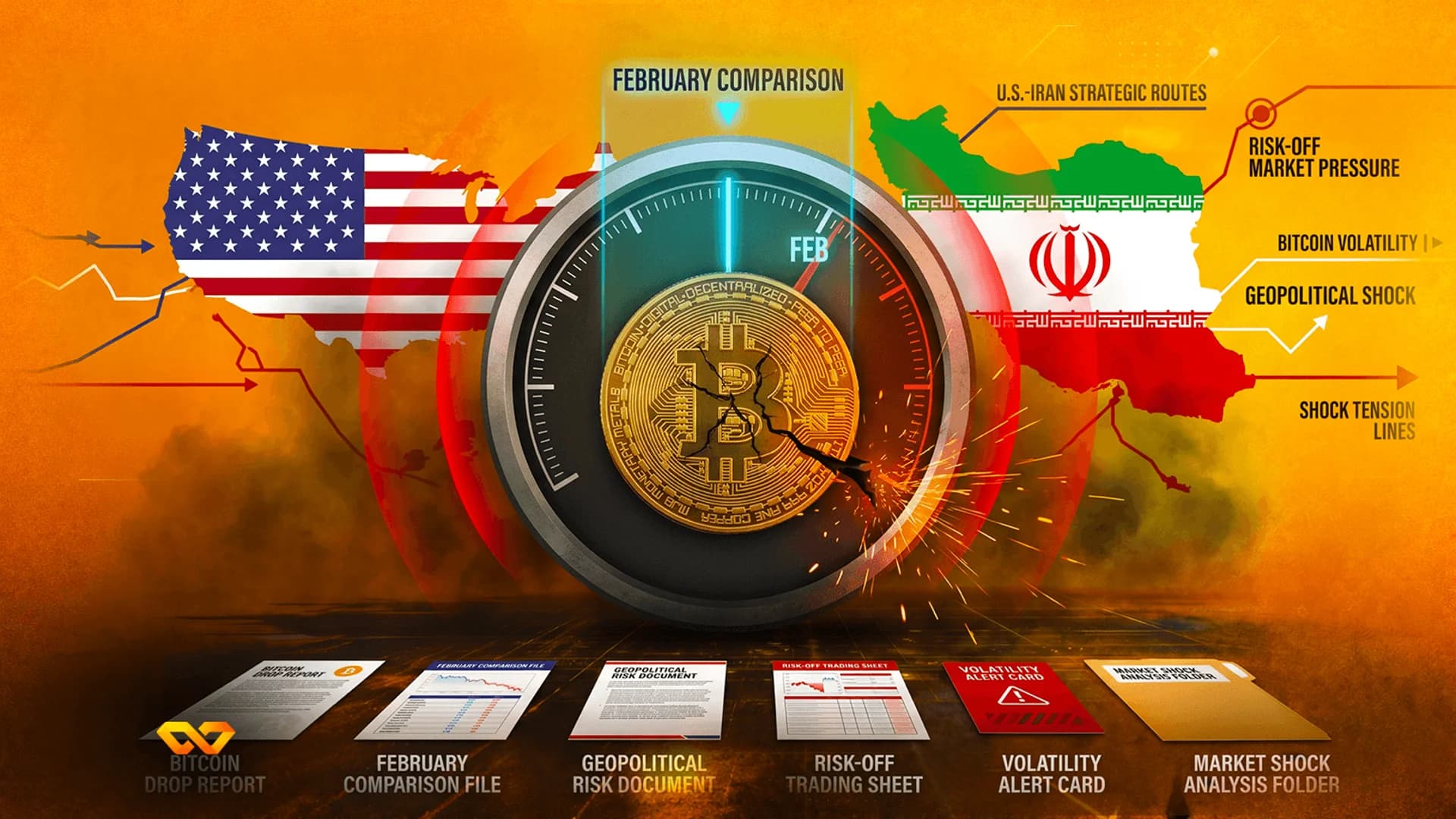
In a sudden escalation of geopolitical risk, the cryptocurrency market experienced a sharp sell-off that drove Bitcoin to its largest daily decline since early February. According to reports, the digital asset shed more than $4,500 in a single session, tumbling below the $66,000 mark. This precipitous drop coincided with news of the United States and Iran launching new military strikes, triggering a rapid shift away from risk assets.
This downward momentum compounds existing pressure from spot ETF outflows and recent institutional selling by MicroStrategy. Market data shows that peer assets like Ethereum faced correlated selling pressure per market data, as global risk appetite soured following the Middle East escalation. Analysts note that the correlation between crypto-assets and geopolitical instability has intensified during this latest round of military conflict.
At the close of June 2, 2026, Bitcoin was trading near $66,200, with market participants closely monitoring the $65,000 support level amid ongoing military tensions. Looking ahead, investors remain focused on the US Core PCE Price Index release scheduled for May 28, 2026, which will serve as a critical catalyst for Fed policy and market liquidity during this period of heightened uncertainty.
Latest Updates · 13
- Notable·
Update: Analyzing market drivers, Citi analysts noted that the primary headwind for Bitcoin is a lack of fresh investor entrants rather than selling pressure from MicroStrategy. The bank suggests this fundamental demand-side weakness represents a more significant barrier to price recovery than current institutional liquidations.
- Notable·
Update: Recent data reveals a deeper structural shift as Bitcoin's performance now trails global equities by the widest margin since 2019. This marks the digital asset's weakest relative performance in seven years, suggesting selling pressure that extends beyond immediate geopolitical tensions.
- Notable·
Update: Sector pressure intensified as MicroStrategy stock plummeted following Michael Saylor's first Bitcoin sale in years, rattling institutional sentiment. Simultaneously, the market faces fresh regulatory headwinds as Senators Bernie Sanders and Elizabeth Warren advocate for the removal of cryptocurrencies from 401(k) retirement plans, potentially impacting long-term capital inflows.
- Notable·
Update: Data as of June 2, 2026, reveals that Bitcoin ETFs have recorded redemptions for 12 consecutive sessions, with total outflows reaching $519 million. While Ether ETFs extended their losing streak to 16 sessions, Solana and HYPE-linked products managed to attract fresh inflows, highlighting a divergence in investor sentiment toward altcoins despite the broader market sell-off.
- Notable·
Update: Despite current price pressures, the mining sector demonstrated significant resilience as Bitcoin miners recorded $1.08 billion in revenue for May. This marks the strongest monthly performance in four months and the first time revenues have surpassed the $1 billion threshold since January 2026, signaling robust network operational activity despite geopolitical volatility.
- Notable·
Update: Market focus has shifted toward technical parameters as Bitcoin tests significant historical support levels that coincide with the cycle peaks of 2021 and 2024. Analysts suggest that maintaining these levels will be a vital indicator of whether the long-term bullish trend remains intact despite current geopolitical pressures.
- Notable·
Update: Parallel to geopolitical pressures, market data reveals a shift in risk appetite toward the tech sector following NVIDIA's record quarterly revenue of $81.6B. This momentum in semiconductor stocks, which surged 5.9%, contributed to record outflows from spot Bitcoin ETFs as investors rotated capital toward AI-driven assets.
- Notable·
Update: Bitcoin reached a fresh intraday low of $65,404 within the last 24 hours, prompting a shift in trader positioning. According to reports, market participants are increasingly seeking protection against further declines, with a notable rise in demand for defensive options targeting the $50,000 level as 'buy the dip' sentiment fades.
- Notable·
Update: Subsequent market data reveals that the downturn triggered a massive $1.8 billion liquidation flush, effectively clearing over-leveraged long positions. Despite the intense selling pressure, Bitcoin managed to hold above the critical $65,000 support zone, signaling resilient demand at these lower price levels.
- Notable·
Update: Bitcoin has now recorded a total decline of 16% over the past two weeks, pressured by MicroStrategy's decision to sell a portion of its holdings. Despite this momentum, technical indicators are signaling a potential shift, as the daily Relative Strength Index (RSI) has reached extremely oversold levels, suggesting a possible near-term bullish reversal due to selling exhaustion.
- Notable·
Update: On-chain data from Santiment indicates that the slide below $67,000 triggered a surge in large-scale activity, with whale transaction counts reaching a six-week high. This spike in whale-tier address movement suggests significant institutional repositioning as market participants reacted to the heightening geopolitical volatility.
- Notable·
Update: Field developments confirmed that the latest sell-off was fueled by Iranian retaliatory strikes against the U.S., intensifying geopolitical friction. From a technical perspective, traders are now monitoring the $65,000 support zone, with warnings that a breach of this level could trigger a further slide toward the $60,000 mark.
- Notable·
Update: Bitcoin has touched its lowest price level since February 2026, as the digital asset market faces stiff competition for liquidity from a wave of blockbuster IPOs. This shift indicates a broadening of the bearish pressure beyond ETF outflows, as institutional capital reallocates toward new equity offerings.