
Japan Crude Oil Imports Hit Record Low Amid Middle East Supply Shocks
Key Facts
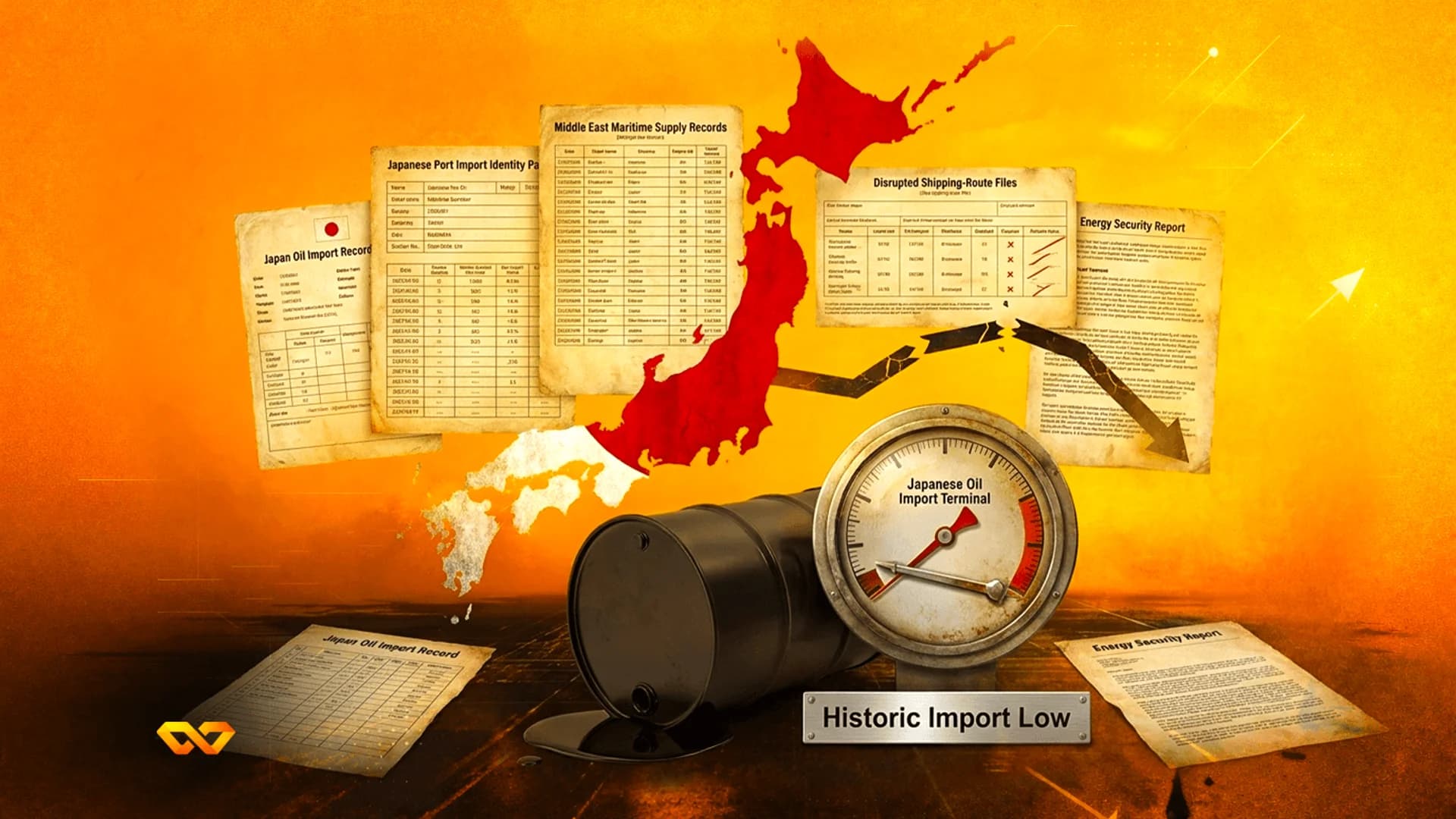
Amid escalating geopolitical tensions threatening global energy security, Japan's crude oil imports crashed by 66% in April, reaching their lowest level since records began. According to data from the Ministry of Economy, Trade and Industry (METI), supplies from the Middle East plunged by 68%, with specific imports from Saudi Arabia and the UAE falling by 58% and 69.4% respectively. In response to these severe disruptions at the Strait of Hormuz, Japan has begun releasing crude from its strategic reserves as part of a global effort coordinated by the International Energy Agency (IEA).
This historic decline comes as Japan typically relies on the Middle East for over 90% of its oil requirements, placing significant strain on Asian supply chains compared to regional peers. Looking at industry context, Saudi Aramco previously reported stable production levels despite shipping volatility, while market reports indicate that insurance premiums for tankers transiting the region have surged. Per market data, this contraction represents the most significant supply shock to the Japanese economy since 1962, highlighting the critical impact of maritime chokepoint closures.
Traders should watch the sustainability of strategic reserve releases and their subsequent impact on Japan's domestic energy prices. According to the economic calendar, the market is monitoring the API Crude Oil Stock Change, which reported a decline of 2.8 million barrels as of May 27, 2026. Future catalysts include potential diplomatic breakthroughs regarding a 60-day ceasefire extension in the Middle East, which remains the primary variable for normalizing trade flows through the Strait of Hormuz.