
AUD/NZD Sees Historic Drop as RBNZ Holds Rates and Australia Inflation Cools
Key Facts
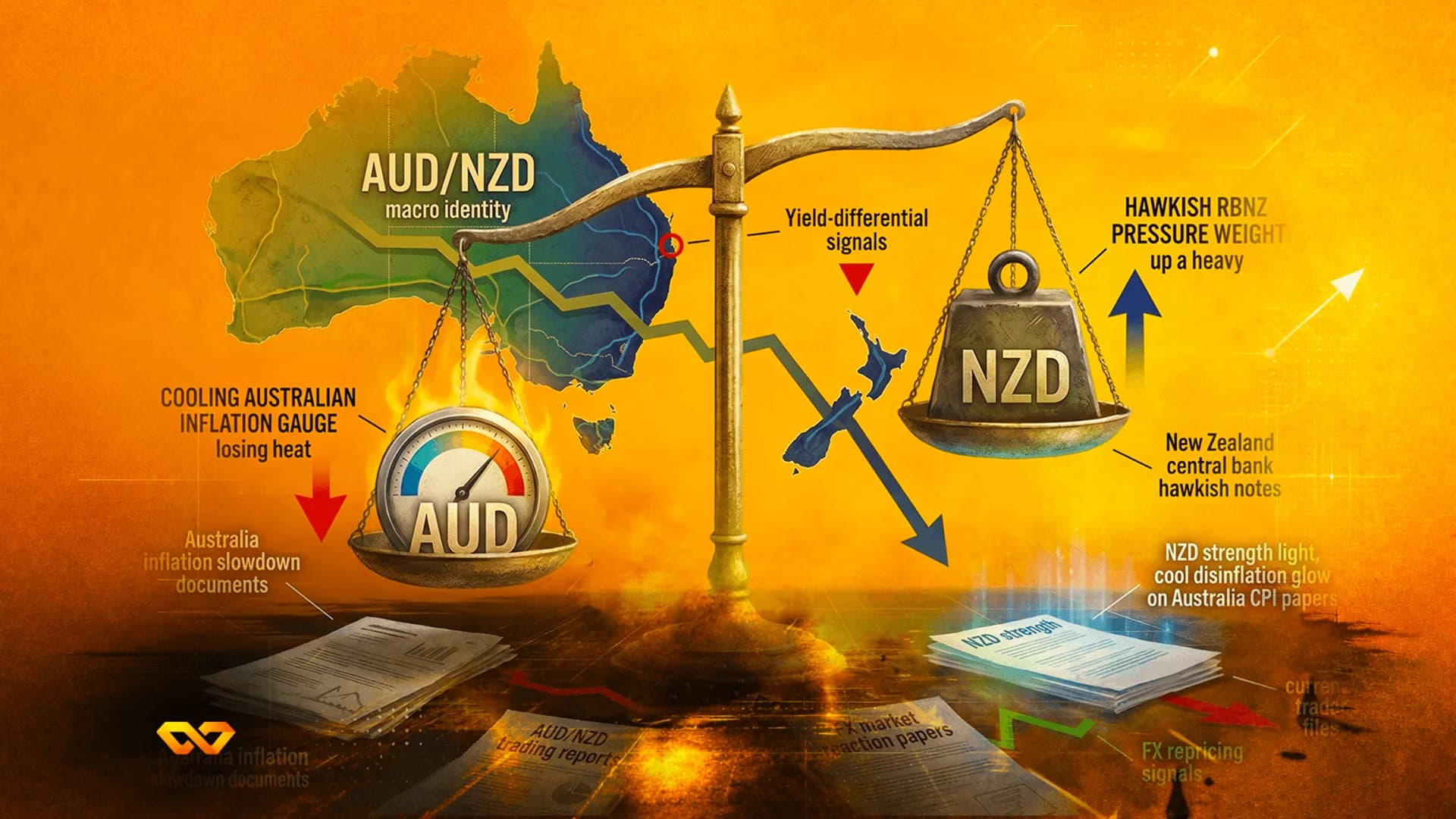
The AUD/NZD pair experienced its largest single-day decline since 2022, retreating sharply from a recent 13-year high following pivotal central bank signals and inflation data. According to reports, the Reserve Bank of New Zealand (RBNZ) maintained the Official Cash Rate at 2.25% but issued a hawkish warning that led markets to price in a 73% probability of a rate hike in July. Simultaneously, Australia's monthly headline inflation unexpectedly slowed to 4.2% in April, falling significantly below the Reserve Bank of Australia's (RBA) estimates and undermining the AUD.
This historic price action highlights a growing monetary policy divergence, as market data shows the Australian dollar struggling against a resilient New Zealand dollar backed by a 1.92 billion trade surplus. The bearish sentiment is further compounded by domestic labor weakness, with Australian unemployment recently rising to 4.5% per market data. Analysts suggest that the scale of this drop indicates a fundamental shift in regional currency positioning, as the RBNZ remains one of the few central banks still signaling potential further tightening.
Traders should closely watch for stabilization signs following this volatility, with AUD/NZD levels reflecting the market's rapid repricing of New Zealand's rate path as of close May 27, 2026. With no high-impact economic calendar events scheduled for the pair over the next seven days, price action will likely be driven by technical flows and central bank rhetoric. The sustainability of this downward trend will depend on whether upcoming Australian data continues to support a pause in RBA policy compared to the RBNZ's restrictive stance.