
Foreign Investment in Germany Hits 2009 Lows as Corporate Bankruptcies Surge
Key Facts
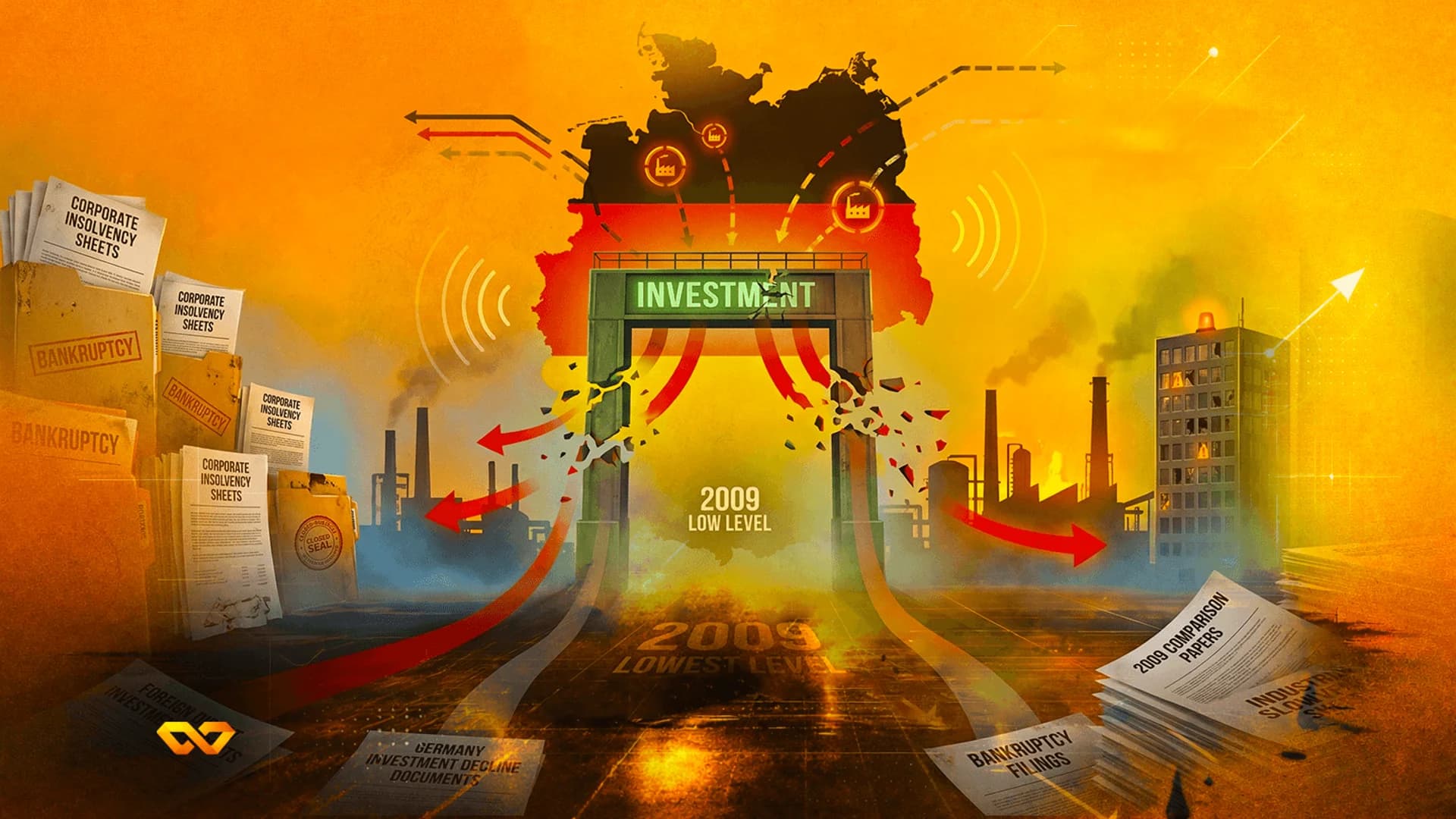
Amid escalating concerns over eroding industrial competitiveness, Germany has recorded a sharp decline in investment attractiveness as new foreign projects hit their lowest levels since the global financial crisis. According to reports, the number of new projects fell by 10% in 2025 to just 548, marking the eighth consecutive year of contraction in investment flows. Parallel to this decline, corporate bankruptcies in the first quarter surged to 4,573 cases, the highest level recorded since 2005.
Experts attribute this investment exodus to a combination of high costs and excessive bureaucracy, with a recent EY report highlighting that elevated energy prices and skilled labor shortages are undermining Germany's status as a stable economic hub. In comparison to its peers, EU trade balance data showed a surplus of 7.8 billion euros (per market data on May 19, 2026), yet internal structural weaknesses in Germany remain a drag on growth compared to GDP growth rates in countries like Japan, which recorded 2.1% annualized growth in the same period.
Traders should monitor upcoming data to assess the depth of the industrial slowdown, particularly the speech by Bundesbank Vice President Buch on May 19, 2026. Markets are also awaiting the release of Germany's annual Producer Price Index (PPI) on May 20, 2026, which previously stood at 1.7%, as these figures will provide clearer signals regarding the cost pressures facing German firms in this deteriorating investment climate.