
U.S.-Iran War Drives Consumer Sentiment to New Record Low in May
Key Facts
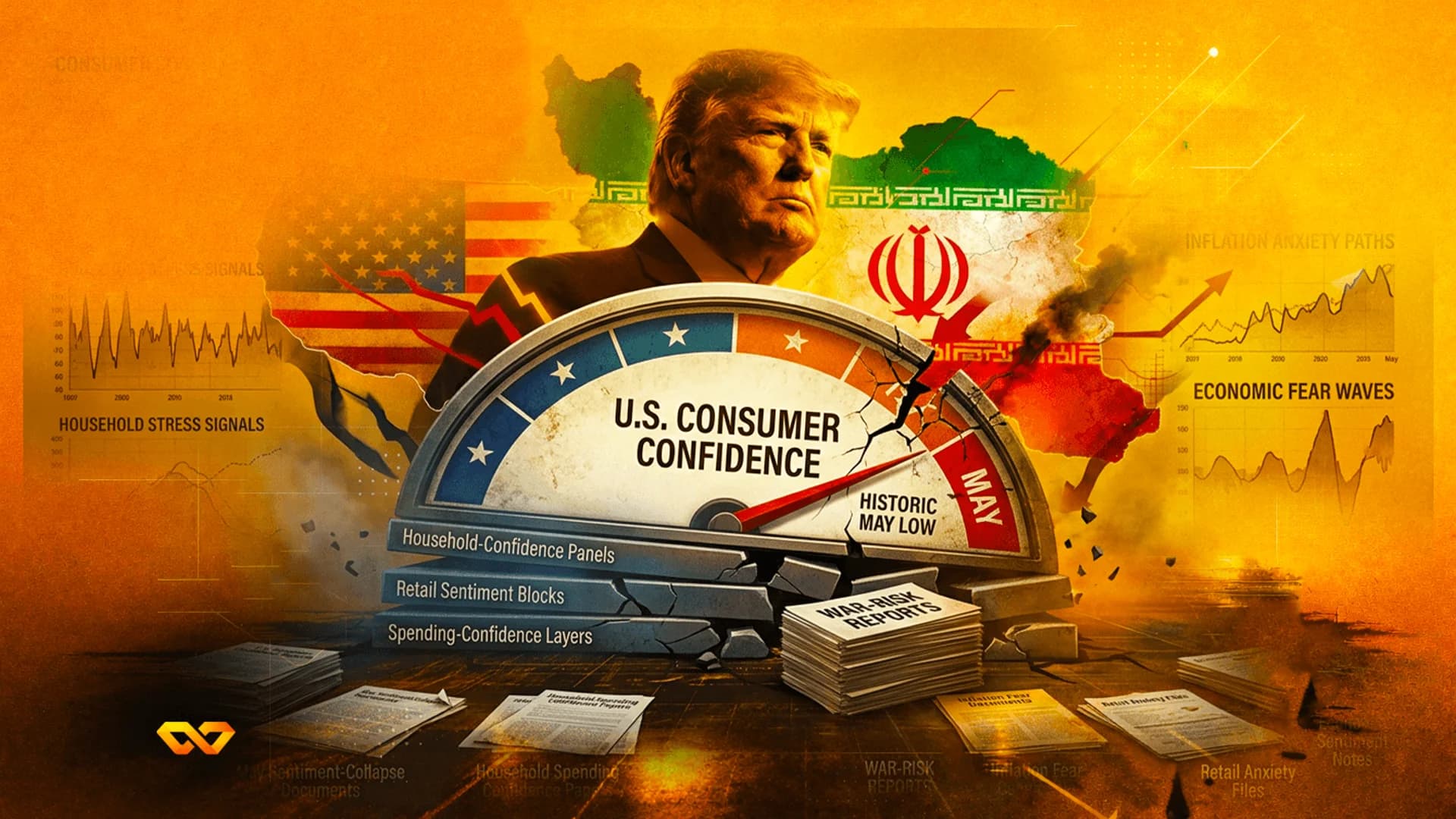
In a move reflecting the direct impact of military conflict on the economy, the University of Michigan's consumer sentiment index plunged to a new all-time low in May. According to reports, this sharp decline was primarily driven by surging inflation fears linked to the outbreak of war between the United States and Iran. Elevated oil prices and direct military tensions have significantly worsened consumer price expectations, leading to a bleak outlook for the broader US economy.
This collapse in morale occurs as global markets face mounting pressure, with China's retail sales showing a meager 0.2% growth in May per market data, missing the 2% forecast. Compared to previous economic cycles, the US index hitting this record low reinforces fears of a severe contraction in consumer spending—the primary engine of US GDP—as energy costs spike due to the direct conflict in the Middle East.
Traders should monitor the duration of energy price shocks, as markets await US retail sales data to gauge the actual impact of the war on consumer behavior. Looking at the economic calendar, focus remains on central bank communications, including speeches by the Bank of England's Greene and Mann on May 18, for clues on how global monetary policy will adapt to the supply-side shocks triggered by the conflict.