
Kevin Warsh Takes Helm at Federal Reserve Amid Historic Market Volatility Risks
Key Facts
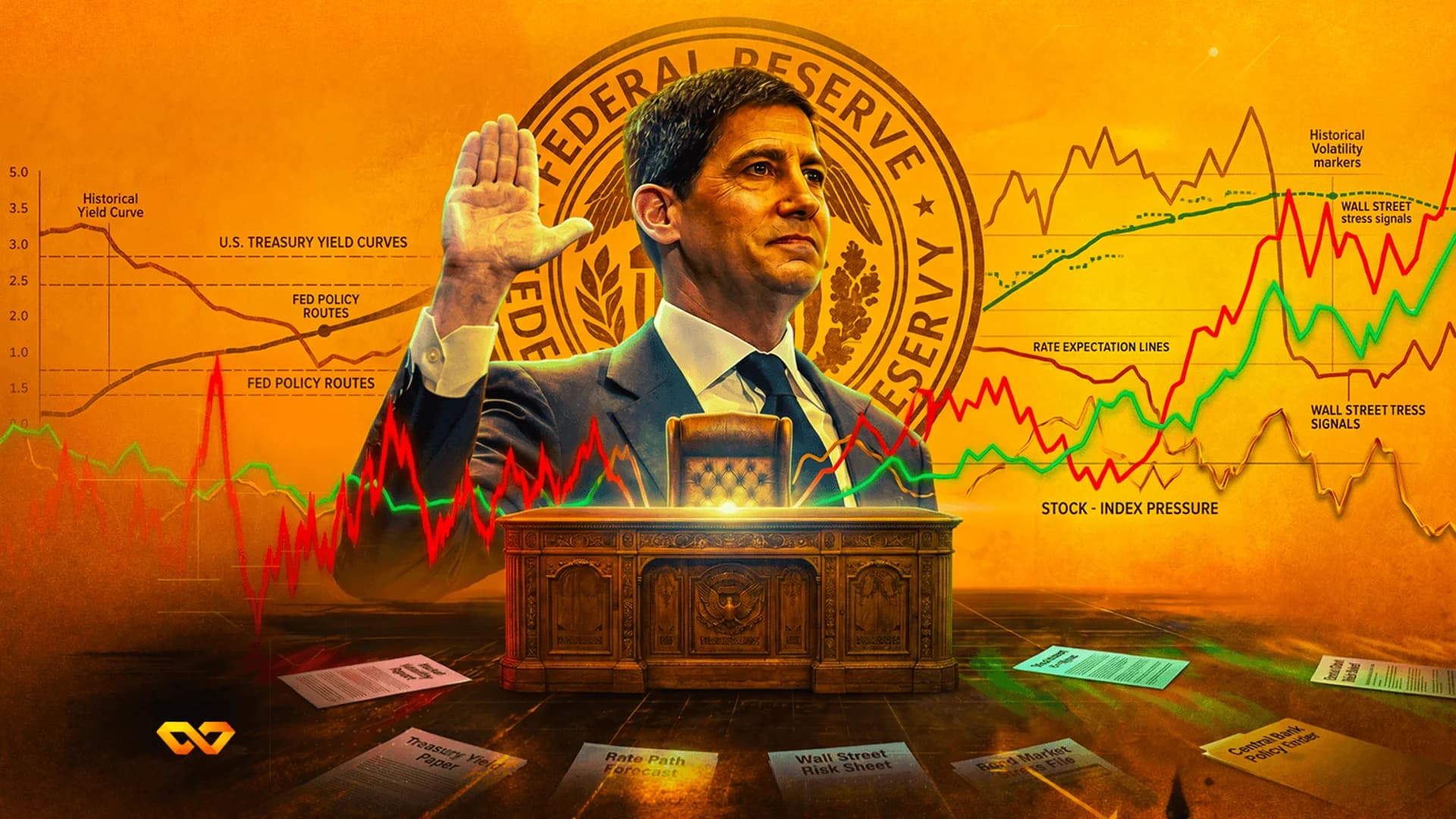
Kevin Warsh officially assumed his role as the Federal Reserve Chair today, marking a significant transition in global monetary policy leadership. According to reports, historical data suggests that the inaugural day for new Fed chairs is often characterized by heightened volatility or cautious performance in the stock market. This leadership change introduces a period of uncertainty as investors wait to decipher the new chair's specific policy leanings.
Warsh takes the helm amid a mixed global economic backdrop; while U.S. Industrial Production rose by 0.7% in May per market data, China reported a sharp miss in Retail Sales at 0.2% versus a 2% forecast. Analysts suggest that markets typically hedge positions during central bank transitions, especially as global inflation remains a key concern, with recent figures showing 5.6% in Russia and 1.9% in Malaysia according to official statistics.
Market participants are now focusing on Warsh's first public remarks to gauge the future path of interest rates, following a strong NY Empire State Manufacturing reading of 19.6 (as of May 15, 2026). Key catalysts to watch include the upcoming Reserve Bank of Australia meeting minutes, which may influence global risk sentiment during this critical first week of the new Fed administration.
Latest Updates · 5
- Notable·
Update: Reports indicate Warsh is weighing a structural shift in the Fed's toolkit, considering a move to restrict the balance sheet to emergency use only. This potential pivot would mark a departure from using the balance sheet as a routine market management tool, potentially signaling a return to more traditional financial mechanisms in U.S. markets.
- Notable·
Update: Warsh was officially sworn in as the 17th Federal Reserve Chair, pledging a structural break from his predecessors by reducing forward guidance and increasing data dependence. He enters the role facing a significant market hurdle, with 10-year Treasury yields at their highest level for an incoming Chair since the Alan Greenspan era.
- Notable·
Update: New challenges have emerged for the Warsh administration as tensions in the Strait of Hormuz escalate, driving inflationary pressures and a decline in U.S. consumer sentiment. Analysts suggest these geopolitical risks may complicate the Fed's efforts to balance interest rate policy with economic growth stability.
- Notable·
Update: Market expectations have solidified against a rate cut at Kevin Warsh's inaugural Fed meeting. This shift suggests that investors are bracing for a more hawkish or cautious stance from the new Chair as he establishes his policy credentials amid persistent global inflation concerns.
- Notable·
Update: Kevin Warsh is officially scheduled to be sworn in this Friday, a key milestone for market participants. Meanwhile, bond market signals are increasingly pricing in the possibility of a rate hike rather than a cut, as persistent inflationary pressures lead investors to brace for a potentially hawkish shift in Fed policy under the new leadership.