
Xi and Putin Warn Against Iran Strikes, Demand Immediate Reopening of Hormuz
Key Facts
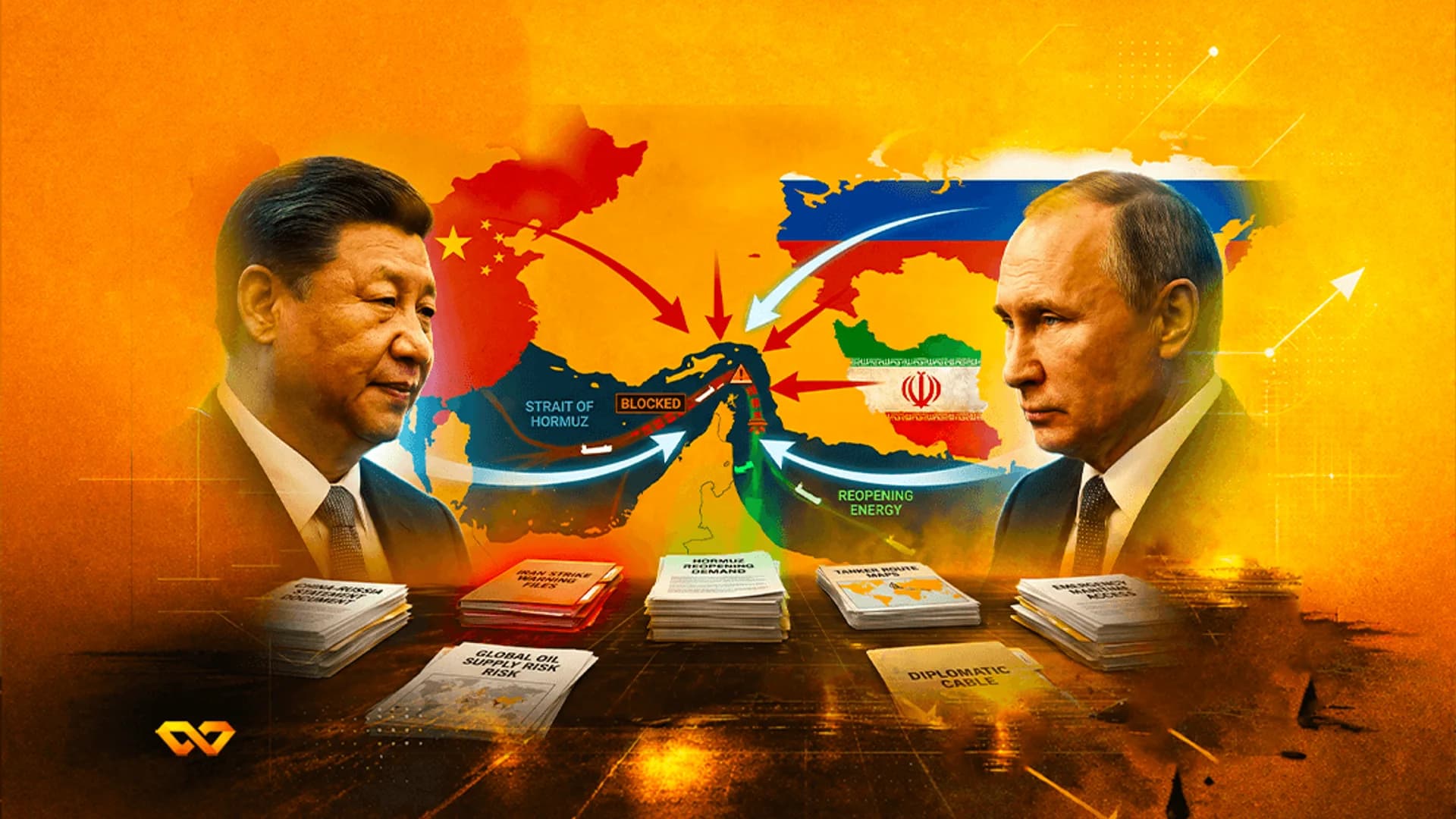
Chinese President Xi Jinping warned against renewed US military strikes on Iran, describing the current Persian Gulf situation as a critical juncture between war and peace. During a high-stakes summit in Beijing hosting Russian President Vladimir Putin, Xi called for a comprehensive Middle East ceasefire and the immediate reopening of the Strait of Hormuz to ensure unimpeded trade. The leaders focused on strengthening their strategic alliance to counter what they termed 'unilateral bullying.'
These developments occur at a sensitive time for global energy markets, as both nations seek to bolster oil and gas cooperation to secure supply chains. Per market data, any disruption in the Strait of Hormuz threatens a sharp spike in crude prices, particularly as China remains the primary importer of Iranian oil. Analysts suggest this Sino-Russian coordination aims to create a geopolitical counterweight to Western pressure, coinciding with a slowdown in Chinese credit data where New Yuan Loans hit -10 billion in May 2026 according to economic calendar data.
Traders are closely monitoring for any Washington response that could impact global financial market stability as of late May 2026. Economically, markets are awaiting US Retail Sales and Initial Jobless Claims data (scheduled for May 14, 2026) to gauge US economic resilience against escalating geopolitical tensions. Focus remains on energy price volatility as a decisive factor for global inflation trends in the coming period.