
The information provided on EL7.AI is for educational and informational purposes only and does not constitute financial advice.
The information provided on EL7.AI is for educational and informational purposes only and does not constitute financial advice.
Sign in to access this content
Sign In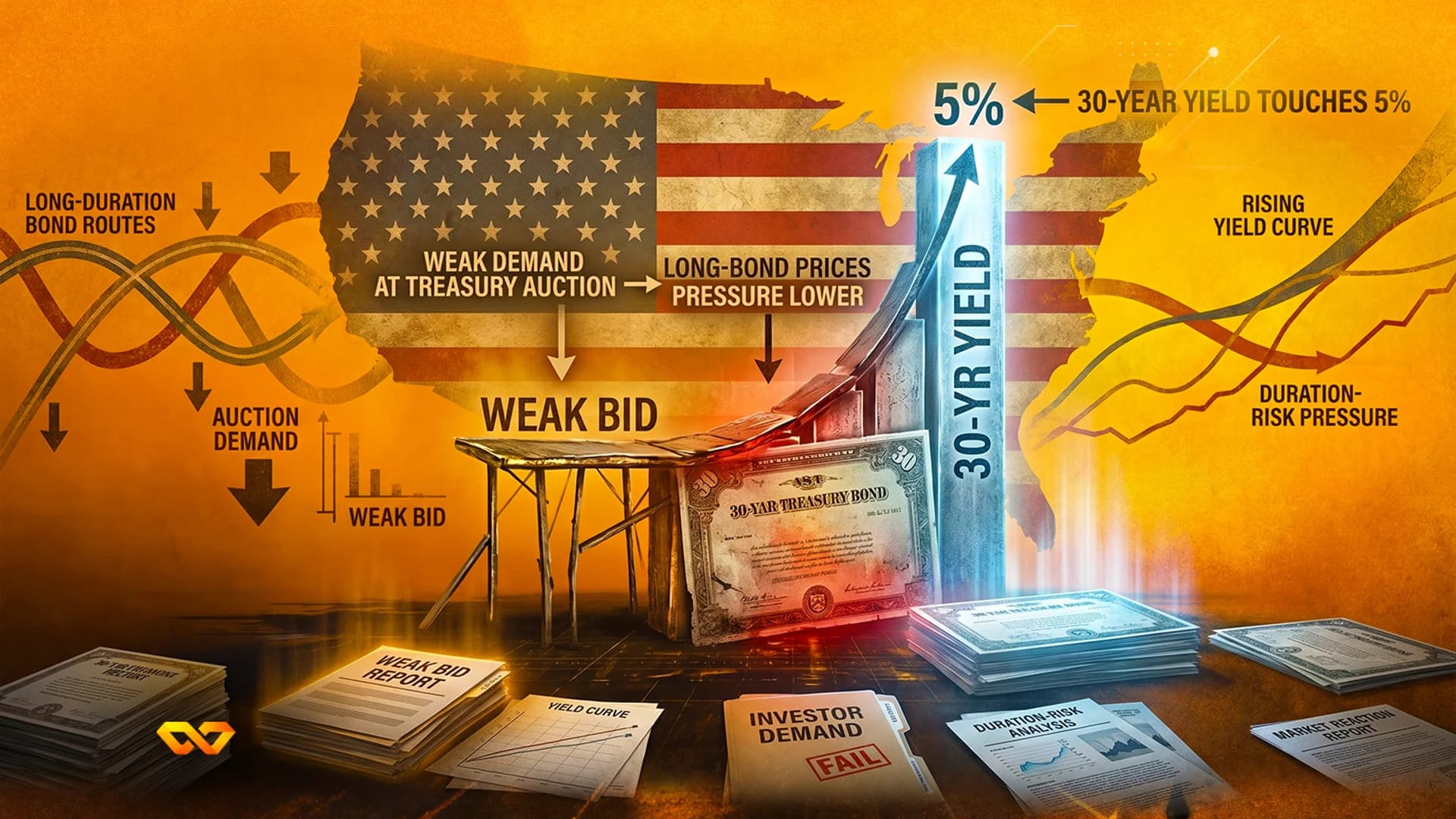
The U.S. Treasury Department's auction of $25 billion in 30-year bonds met with weak demand, resulting in a yield of 5% for the first time since 2007. Persistent fears regarding long-term inflation and consecutive economic shocks have significantly reduced investor appetite for long-dated government debt. According to reports, this yield milestone reflects growing fiscal pressure and the market's adjustment to a higher-for-longer interest rate environment.
This surge in yields coincides with broader inflationary pressures, as market data from May 12, 2026, showed the U.S. annual inflation rate rising to 3.8%, exceeding the 3.7% forecast. Similarly, per market data, Germany's CPI recorded a 2.9% year-on-year increase, reinforcing global concerns over prolonged monetary tightening. The 5% threshold represents a major shift from the low-rate environment of the past decade, impacting valuations across fixed-income portfolios.
Looking ahead, traders are focusing on upcoming communications from Federal Reserve officials, including speeches by Daly, Goolsbee, Waller, and Bowman, to gauge the future rate path. Additionally, the U.S. Existing Home Sales data scheduled for May 11, 2026, will be a critical catalyst for assessing how rising yields are impacting the housing market. As of the May 15, 2026 close, the 5% level remains a key psychological benchmark for the bond market's trajectory.
Update: The bond market sell-off extended to medium-term maturities as the 10-year Treasury yield climbed to nearly 4.6% on Friday, May 15, 2026. This level marks its highest point in more than a year, further intensifying broad selling pressure across sovereign debt instruments.