
US-China Trade Breakdown Deepens Market Rout as UK Gilt Yields Hit 40-Year High
Key Facts
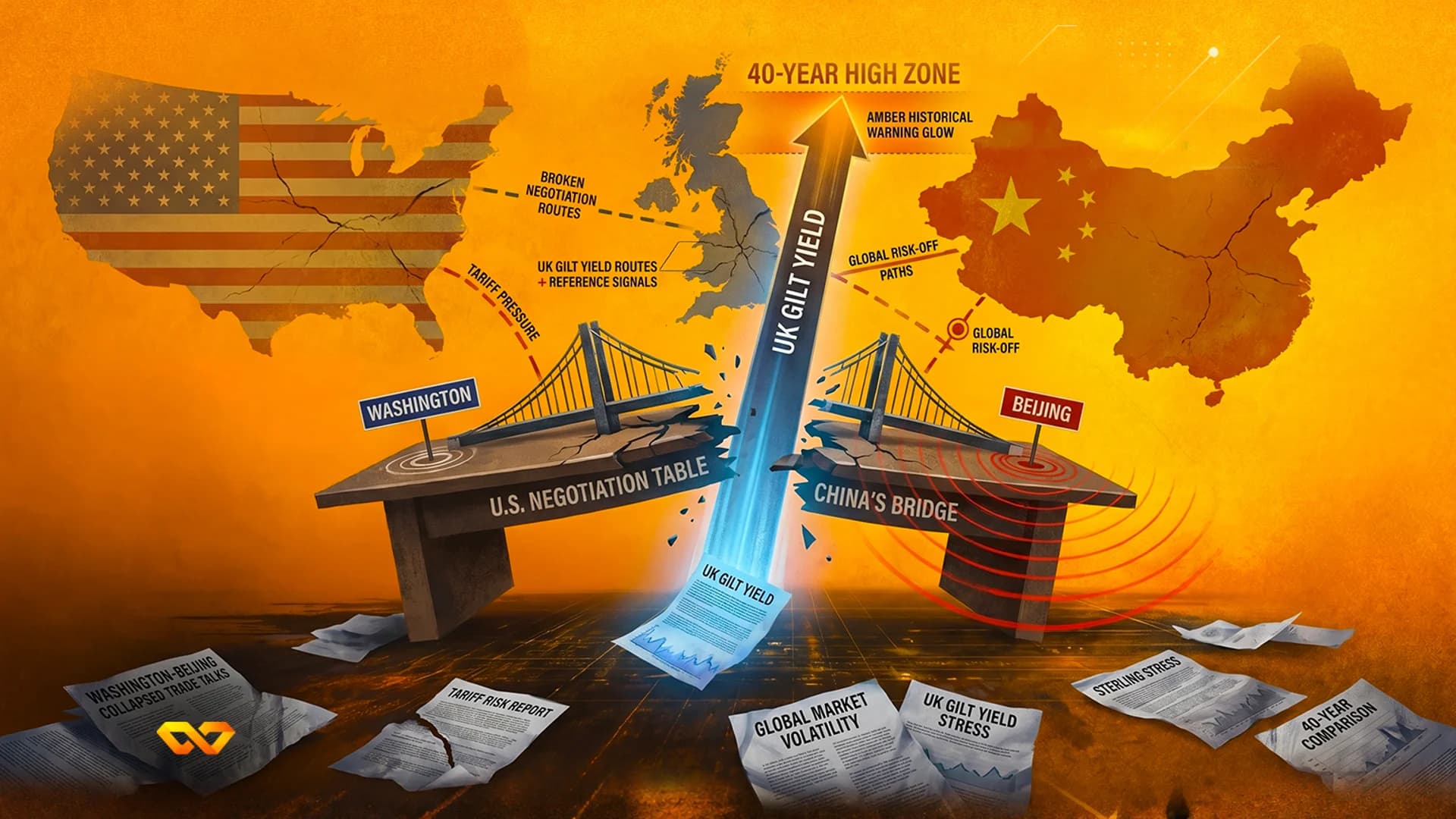
Global market volatility intensified as trade relations between Washington and Beijing showed signs of collapse, with Chinese customs halting export clearances for hundreds of US beef plants. According to reports, this trade friction coincided with a historic sell-off in global debt markets, pushing the 30-year US Treasury yield to 5.10% and the 30-year UK Gilt yield to 5.82%, its highest level since 1982.
The contagion spread rapidly through Asian markets, where the Kospi plunged 6% and Japanese semiconductor stocks dropped approximately 5% amid uncertainty regarding NVIDIA H200 exports to China. Per market data, the KWEB ETF closed down 4.6%, reflecting investor pessimism following the disappointing summit. These trade tensions exacerbate existing geopolitical risks in the Strait of Hormuz, which have maintained Brent crude prices above $107 per barrel, creating a dual inflationary shock.
Traders are now focused on key technical support levels as long-term yields hold at multi-decade highs as of close May 14, 2026. With US Existing Home Sales data due May 11, 2026, the market is bracing for upcoming Fed communications to determine if this spike in global yields and renewed trade hostilities will alter the central bank's monetary policy trajectory in the coming months.
Latest Updates · 1
- Notable·
Update: Selling pressure extended to US futures as of May 15, 2026, with Nasdaq futures sliding 1.4% led by a 2% drop in NVDA and a 1.2% decline in AAPL. The semiconductor and memory sectors faced additional headwinds from strikes at Samsung Electronics, which overshadowed positive catalysts including Pershing Square's new stake in Microsoft and a 3% gain in DXCM shares.