
Venezuela Launches $170 Billion Sovereign Debt Restructuring
Key Facts
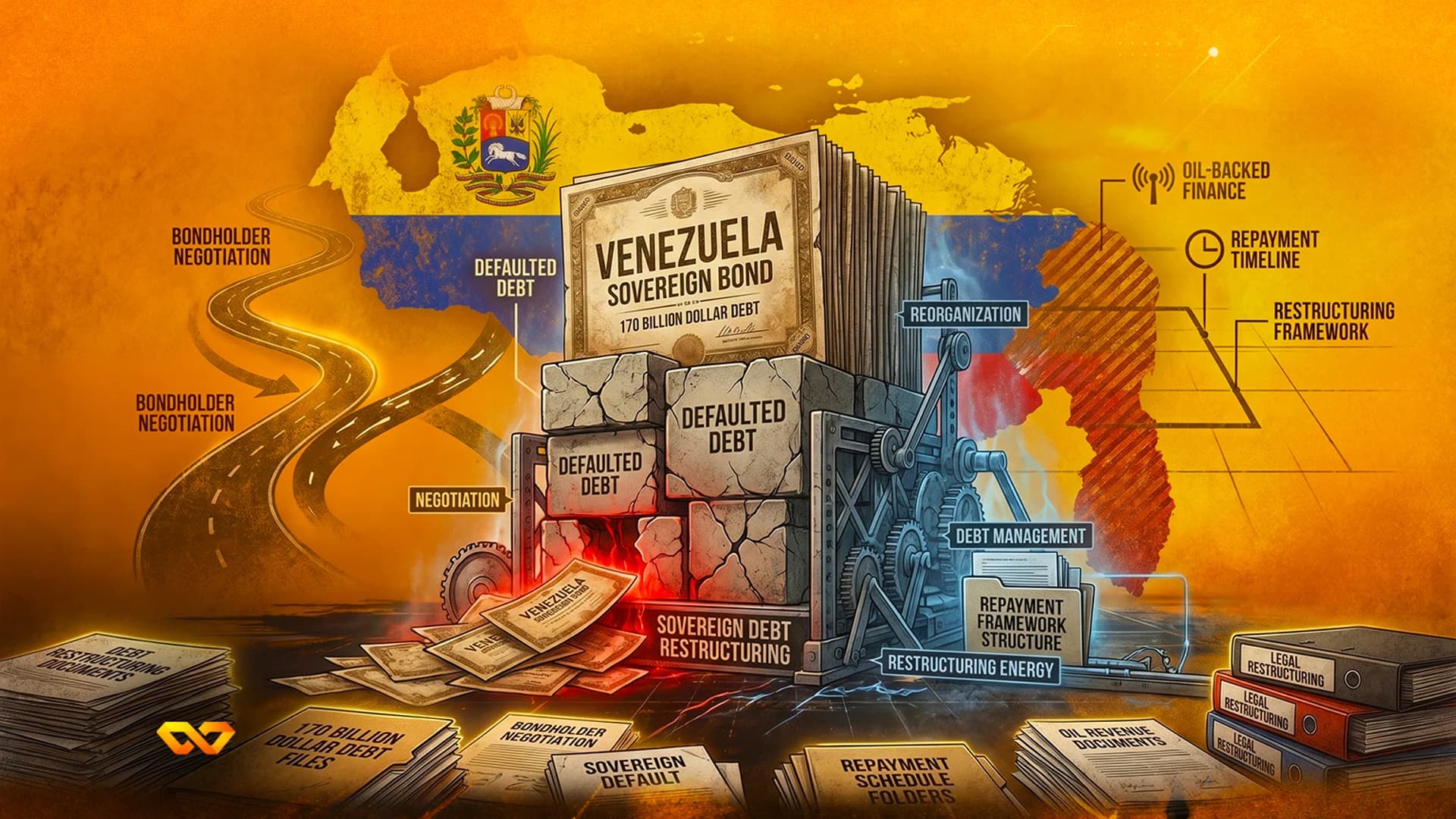
Venezuela has formally initiated efforts to restructure its massive $170 billion debt load, aiming to end its exclusion from global capital markets that has persisted since 2017. According to Wall Street Journal reports, this move coincides with a thawing of diplomatic relations between Venezuela and the United States. The government seeks to address a long-standing default that has crippled the nation's economy for nearly a decade.
This initiative arrives amid mixed signals in emerging markets; for instance, per market data, Mexico reported an annual inflation rate of 4.45% in May 2026. Analysts often compare this restructuring attempt to previous regional efforts like those in Argentina, though Venezuela's situation remains uniquely complex due to the sheer scale of sovereign obligations and the legal intricacies of international sanctions that continue to restrict secondary market bond trading.
Investors are now closely monitoring whether Washington will further ease financial sanctions as a catalyst for a successful restructuring. According to the economic calendar, upcoming speeches from Fed officials including Kashkari and Williams in May 2026 will be critical for assessing global liquidity trends and risk appetite for distressed emerging market debt. The success of this effort will ultimately depend on political stability and the ability to reach consensus with international creditors.