
Senate Confirms Kevin Warsh as Federal Reserve Chair
Key Facts
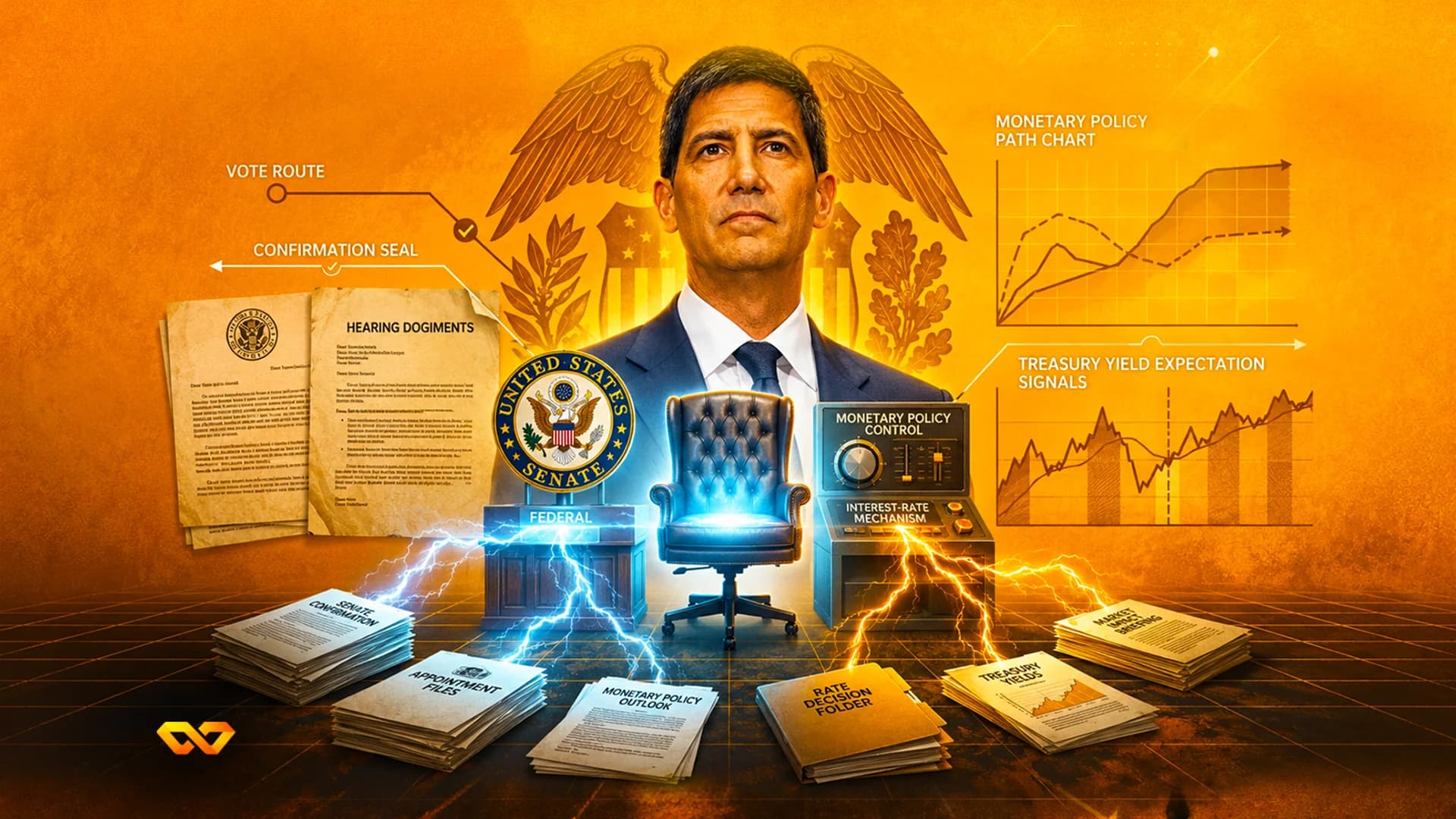
The U.S. Senate has officially confirmed Kevin Warsh as the new Chair of the Federal Reserve, succeeding Jerome Powell. The confirmation was achieved through a divisive party-line vote, marking the most contentious confirmation for a Fed chair in history. This leadership transition occurs just one day before lawmakers are scheduled to vote on the Clarity Act, a significant piece of legislation regarding crypto market structure.
Warsh assumes leadership amid heightened market scrutiny over the future path of interest rates and political pressure for monetary easing. Per market data, global central banks remain on divergent paths; for instance, the Riksbank maintained rates at 1.75% on May 7, 2026, while Norway's central bank opted for a hike to 4.25% on the same day. The narrow margin of Warsh's confirmation suggests he may face significant friction in implementing policy shifts compared to his predecessors.
Investors are now pivoting to monitor how global markets absorb this transition at the helm of the Fed. According to the economic calendar, key catalysts include German Industrial Production data and speeches from ECB officials Lagarde and Guindos scheduled for May 8, 2026. These events, coupled with the upcoming legislative vote on digital assets, will provide the first real-world test of market confidence in the new Warsh era.
Latest Updates · 1
- Notable·
Update: Financial markets reacted positively to the confirmation, with the Nasdaq and S&P 500 hitting new all-time highs immediately following the vote. Conversely, the Dow Jones showed mixed performance, reflecting selective optimism in tech and growth sectors regarding the new Fed leadership.