
The information provided on EL7.AI is for educational and informational purposes only and does not constitute financial advice.
The information provided on EL7.AI is for educational and informational purposes only and does not constitute financial advice.
Sign in to access this content
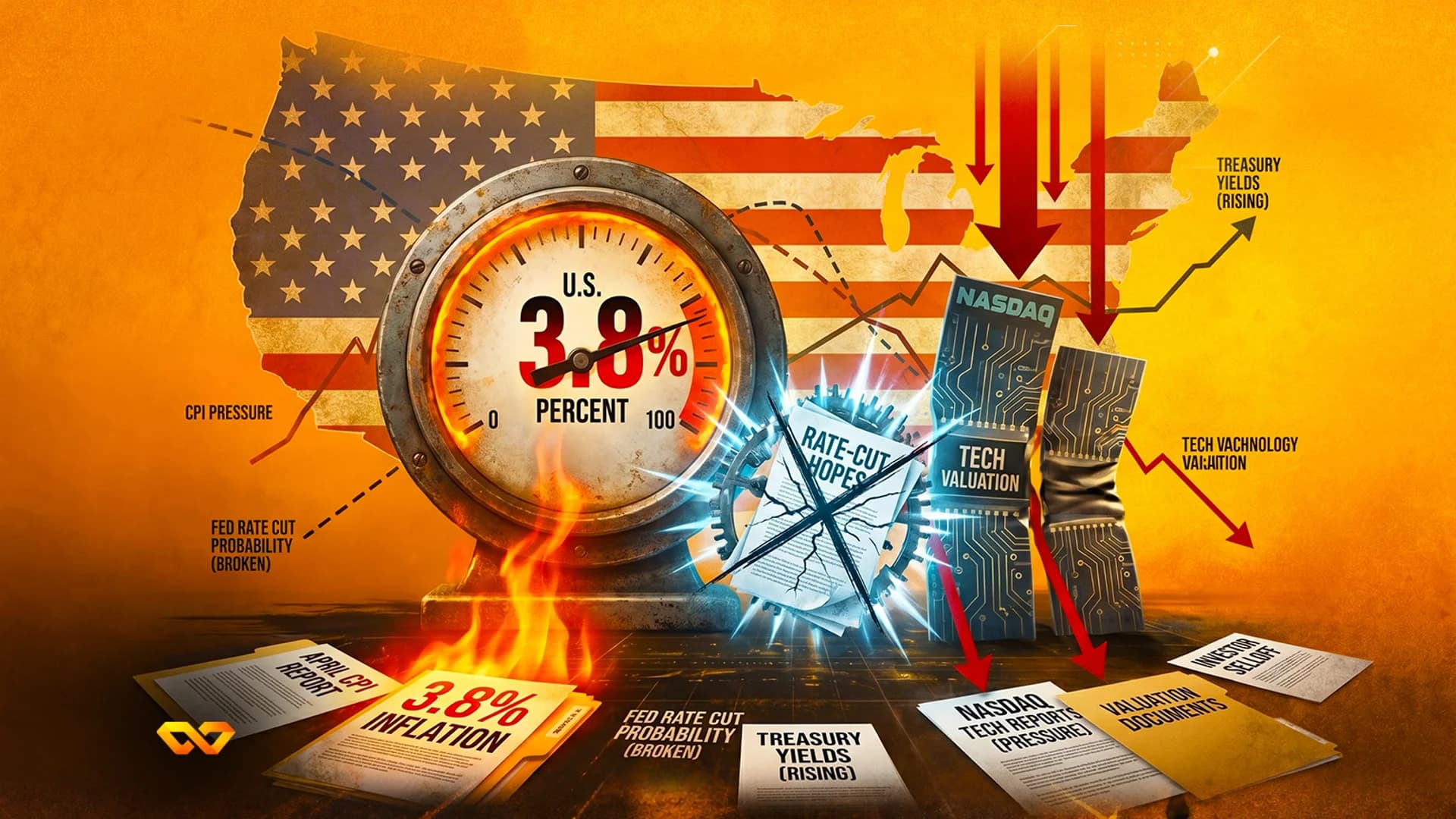
Sign InAccording to reports, US inflation surged to 3.8% in April, reaching its highest level in three years. This reacceleration has effectively wiped out market expectations for Federal Reserve rate cuts, subsequently pushing Treasury yields and the US dollar higher. Semiconductor stocks experienced a sharp reversal following a six-week rally, which significantly pressured the Nasdaq 100 index.
This inflationary spike intensifies pressure on high-growth assets, with the USD/JPY pair reacting strongly to the dollar's dominance. In contrast to the US situation, per market data, Eurozone retail sales contracted by -0.1% in March, highlighting a growing economic divergence between US price pressures and European stagnation. Recent earnings reports from major chipmakers like Nvidia and AMD suggest heightened sensitivity to capital costs driven by rising bond yields.
Traders should monitor USD/JPY levels as they react to widening yield spreads, with the pair trading at critical levels as of the close on May 13, 2026. Looking ahead at the economic calendar, focus shifts to upcoming Fed commentary, including a scheduled speech by Kashkari later today, for insights into monetary policy direction. Additionally, US Initial Jobless Claims will be a key catalyst in assessing labor market resilience against sustained high interest rates.
Update: New data revealed a sharp acceleration in producer inflation, with the Producer Price Index (PPI) jumping 1.4% month-over-month in April, far exceeding the 0.5% forecast. This surge, up from 0.7% in the prior month, marks the highest level since 2022, suggesting persistent upstream price pressures that could spill over into consumer prices and further complicate the Fed's policy path.
Update: Recently released data showed the Producer Price Index (PPI) jumping at its fastest pace since 2022, indicating that cost pressures are filtering through the supply chain. This unexpected spike in wholesale inflation reinforces fears of a 'higher-for-longer' interest rate environment, adding further downward pressure on US equity indices.
Update: Selling pressure extended to Asian markets, which saw a notable decline driven by both the US inflation data and mounting concerns over the stability of a ceasefire in Iran. Analysts suggest these geopolitical tensions are heightening global market uncertainty, boosting demand for safe-haven assets while weighing on risk appetite in today's trading sessions.